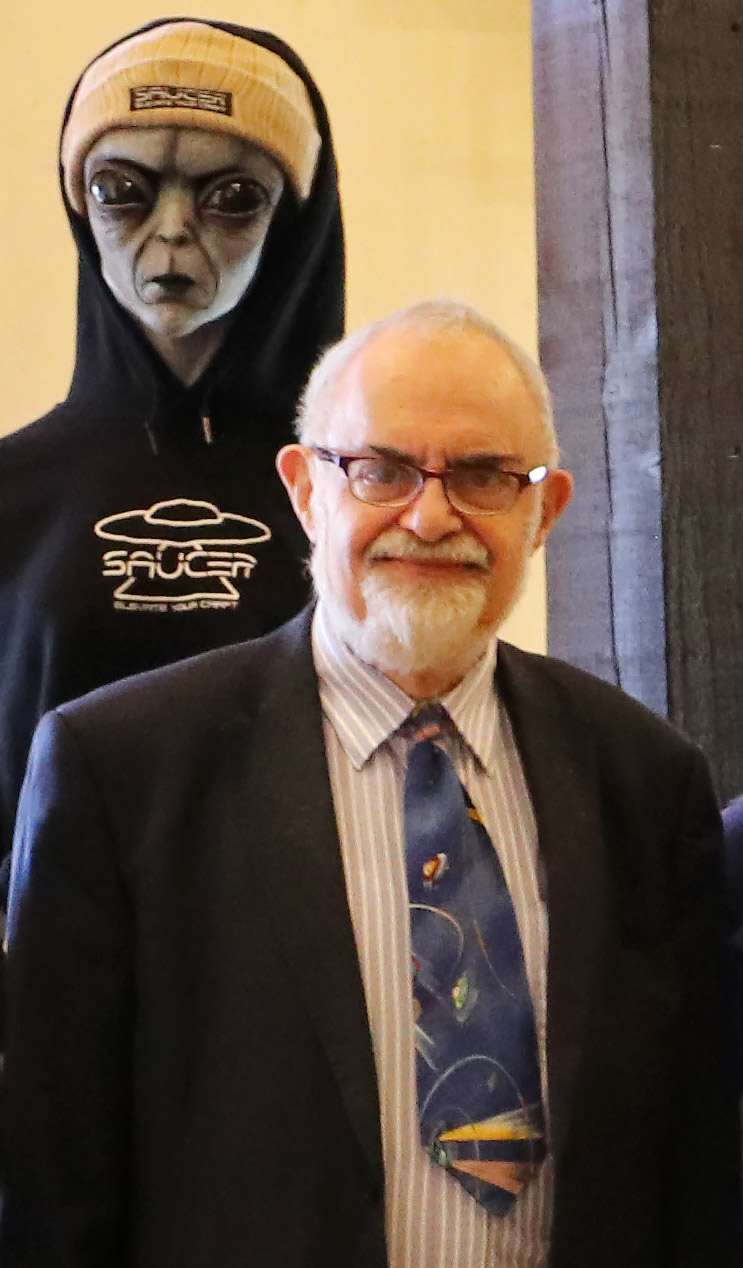
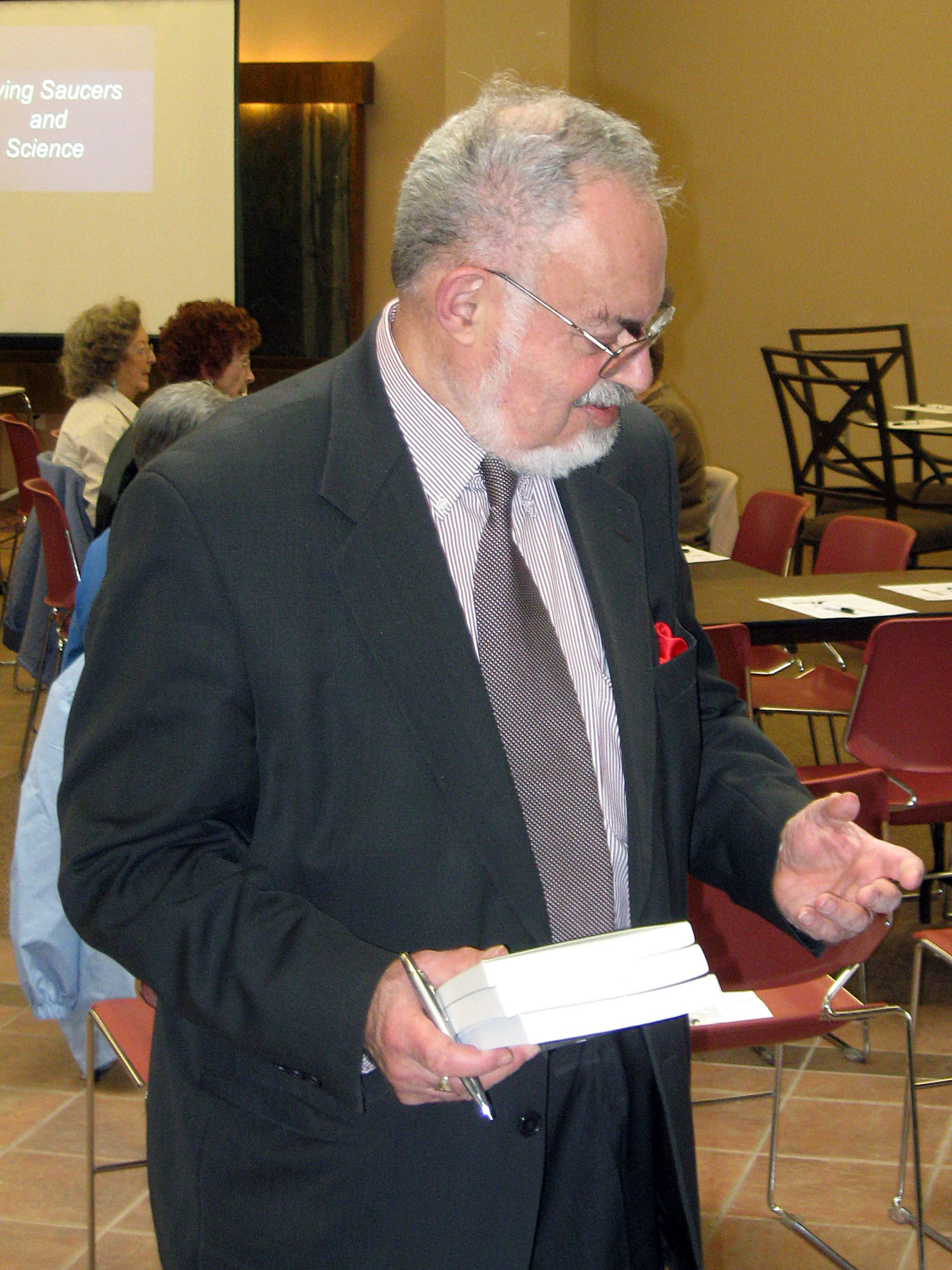
FigureStanton Friedman (1934–2019)
aka Stanton Friedman · Stan Friedman · Friedman
Nuclear physicist (MS physics, University of Chicago, 1956); worked on Aircraft Nuclear Propulsion and on nuclear-rocket programs for General Electric and General Motors; the first researcher to investigate the Roswell incident, beginning with a 1978 interview with retired Maj. Jesse Marcel Sr., the 509th Bomb Group intelligence officer who had handled the original debris in July 1947.
What's documented
Stanton T. Friedman. BS physics University of Chicago 1955; MS 1956. Worked from 1956 to 1970 on classified nuclear programs — Aircraft Nuclear Propulsion at General Electric Cincinnati, nuclear rocket programs at General Motors Allison Division, and on fusion at Westinghouse Astronuclear. Lectured publicly on UFOs from 1967 onward (his standard talk was titled “Flying Saucers Are Real”); by his own count he delivered the talk over 700 times at over 600 universities and to professional societies. In February 1978 Friedman, on a lecture tour, took a phone call from a Baton Rouge TV station receptionist suggesting he speak with a local engineer who claimed to have handled wreckage from a crashed flying saucer. That engineer was retired Maj. Jesse Marcel Sr., who in July 1947 had been the 509th Bomb Group intelligence officer at Roswell Army Air Field — the unit that recovered the debris from rancher W. W. “Mac” Brazel’s field. Friedman interviewed Marcel in February 1978 and again the same year; the interviews are the seed of all subsequent Roswell research. He went on to co-author Crash at Corona (with Don Berliner, 1992) and TOP SECRET / MAJIC (1996, on the MJ-12 documents). The MJ-12 documents themselves are widely considered hoaxes; Friedman, to his death, argued some were authentic. He died in Toronto on 13 May 2019 at age 84. Whatever one concludes about MJ-12, the 1978 Marcel interview is the documented origin point of Roswell as a public phenomenon — without Friedman, the case as a cultural object does not exist in its current form.