Sighting waveMexico Eclipse Wave (11 July 1991)
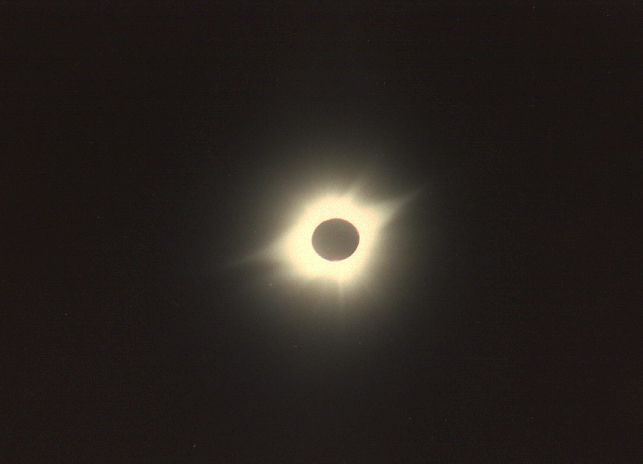
During the 6 minutes 53 seconds of totality of the 11 July 1991 total solar eclipse, residents of Mexico City and surrounding states filmed metallic disc-shaped objects from at least 17 independent camera locations.
What's documented
The 11 July 1991 total solar eclipse — the longest of the 20th century in the Western Hemisphere — passed over Mexico City at 13:25 local time. During the 6 minutes 53 seconds of totality, residents of Mexico City and of the states of Oaxaca, Veracruz, Puebla, and Guerrero filmed metallic disc-shaped objects on amateur videocameras. Journalist Jaime Maussan, then of the Mexican news program 60 Minutos, compiled footage from 17 independent witness locations within the first month. The Mexican government did not investigate or comment officially.
Notable & intriguing
-
Mexican journalist Jaime Maussan, then a host on the program *60 Minutos*, compiled videotaped footage of disc-shaped objects filmed during the 11 July 1991 eclipse totality from 17 independent amateur photographers within 30 days of the event.
Jaime Maussan, *Los OVNIs y el Eclipse* documentary, 1992; *60 Minutos*, Mexican Televisa network, July–August 1991
-
The 11 July 1991 total solar eclipse, with 6 minutes 53 seconds of totality at greatest eclipse, was the longest of the 20th century — and remains the longest until 22 July 2150 by Saros 136 calculations.
NASA Eclipse Bulletin TP-1989-4189; F. Espenak
-
Witnesses who filmed the objects independently included civil engineer Guillermo Arragón in Mexico City, journalist Madeleine Rodríguez in Toluca, and a school class in Puebla; the footage was reviewed in 2004 by Stanton Friedman, who concluded the multiplicity of independent camera angles made coordinated hoax 'effectively impossible.'
Stanton Friedman, *Flying Saucers and Science*, 2008, ch. 11