Ongoing phenomenonMexico City Eclipse Wave (11 July 1991)
aka Mexico City eclipse · Mexico City eclipse wave · 1991 Mexico eclipse · Mexico City UFO wave
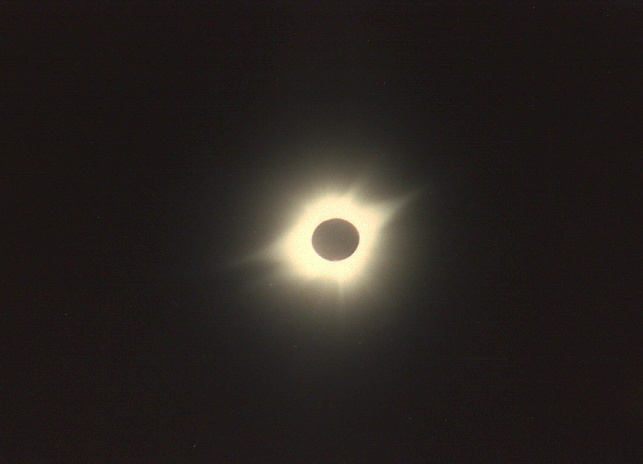
On 11 July 1991, during the 6-minute, 53-second total solar eclipse visible from central Mexico, an estimated 14 to 17 video recordings — made independently by witnesses across Mexico City — captured a metallic disk-shaped object over the city during totality. The number of independent recordings during a discrete known time-window makes this the most camera-witnessed single event in UAP history.
What's documented
On 11 July 1991, the path of totality for a major solar eclipse passed over central Mexico, including Mexico City. The eclipse was the longest total solar eclipse visible from a major city for many years (6 minutes 53 seconds in some locations), and tens of thousands of residents took to rooftops and balconies with video cameras to record it. During the totality window, an estimated 14 to 17 separate camera-witnesses across the city — independently, with different vantages, cameras, and tape stocks — recorded a metallic disk-shaped object hovering at apparent high altitude over the southern part of the city. Lee and Brit Elders, working with Mexican investigator Jaime Maussán, collected the recordings over the subsequent months and the case was presented in Maussán’s documentary series and in Lee Elders’ video presentations 1992–94. Of all UAP cases, this one is the cleanest on the question of multiple independent witnesses with synchronized timestamps; the eclipse provided an exact time signature on every recording. The prosaic candidate explanation is Venus — which was indeed visible during totality and at the rough azimuth-altitude described. The residual difficulties with the Venus explanation are: (1) several of the recordings show the object’s apparent angular motion relative to fixed landmarks, motion inconsistent with Venus’s slow drift; (2) zoom-in frames on the higher-resolution tapes appear to show structure (a disk with apparent rim detail), where Venus would resolve to a featureless point. Neither point is dispositive. What remains is the camera count: ~15 independent recordings of something during a 7-minute window. Whatever the something was.