Bermuda Triangle
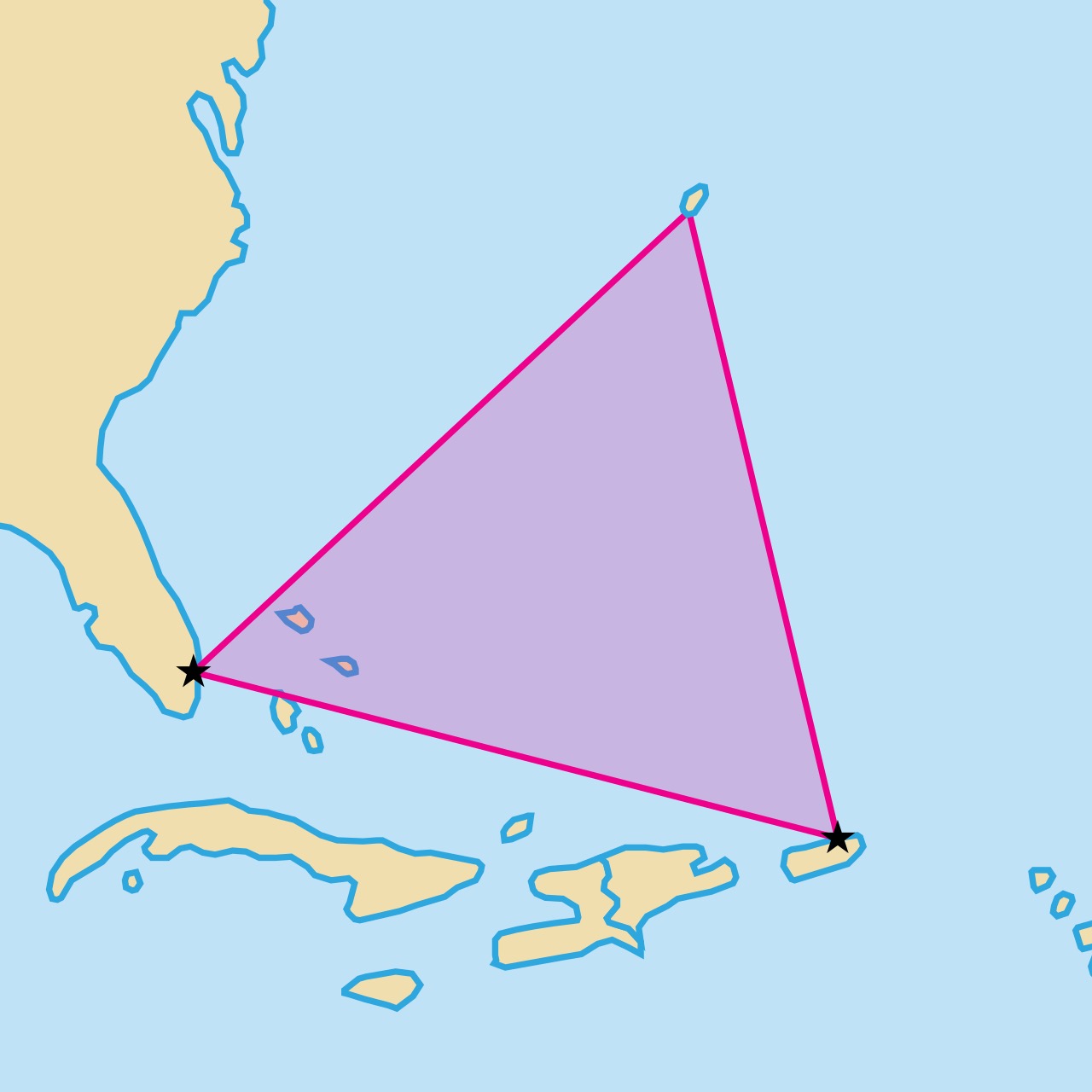
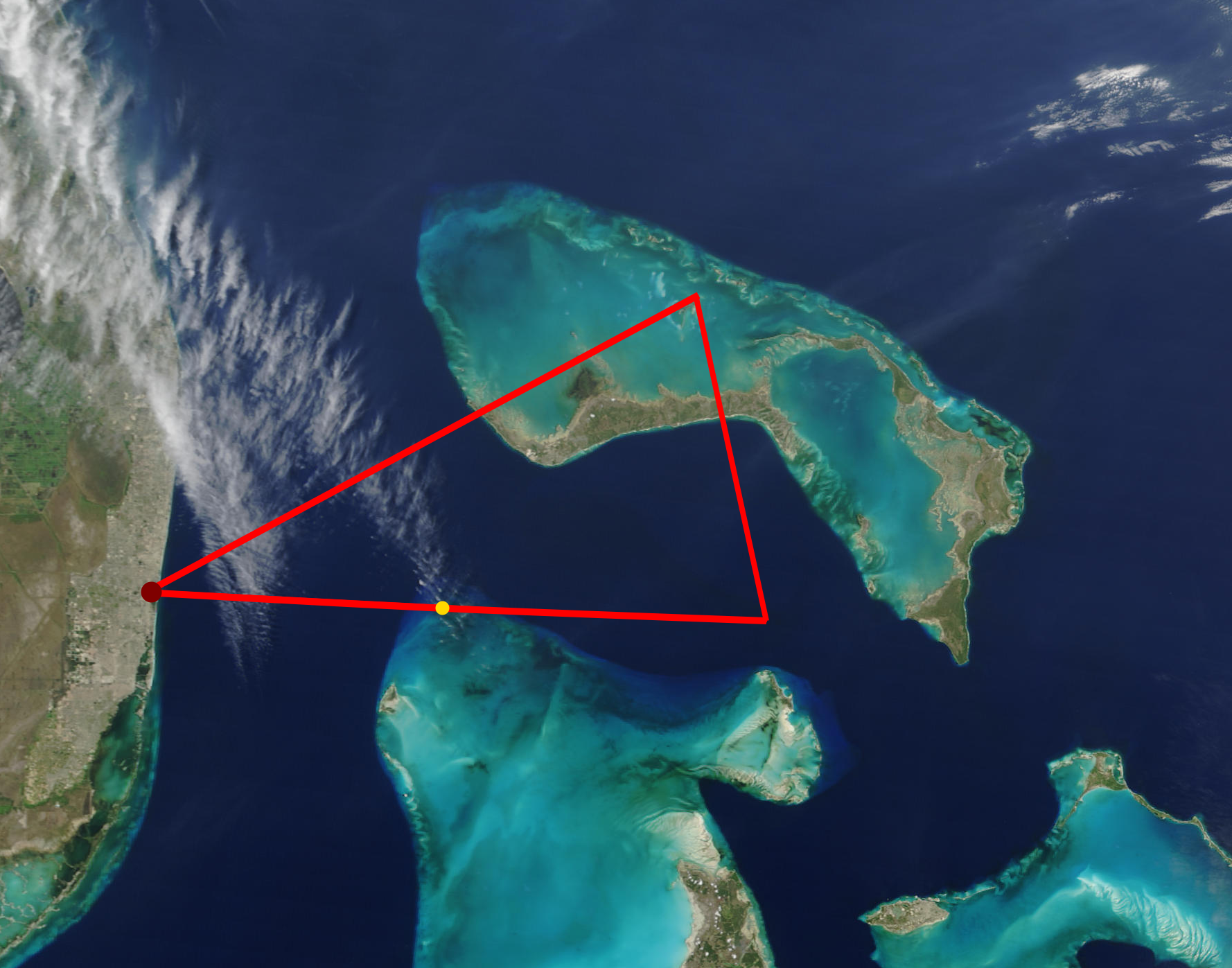
25°N, 71°W (approx. center) — Western North Atlantic — region bounded approximately by Miami, San Juan, and Bermuda
What's documented
The Bermuda Triangle is a region of the western North Atlantic bounded approximately by Miami, Florida; San Juan, Puerto Rico; and Bermuda. The term was coined by writer Vincent Gaddis in Argosy magazine, February 1964. Lloyd's of London does not consider the region a higher-risk insurance area than other heavily trafficked oceans. The U.S. Coast Guard does not recognize the area as anomalous. Nonetheless, several verifiable disappearances of vessels and aircraft in the region are matters of established record.
Notable & intriguing
-
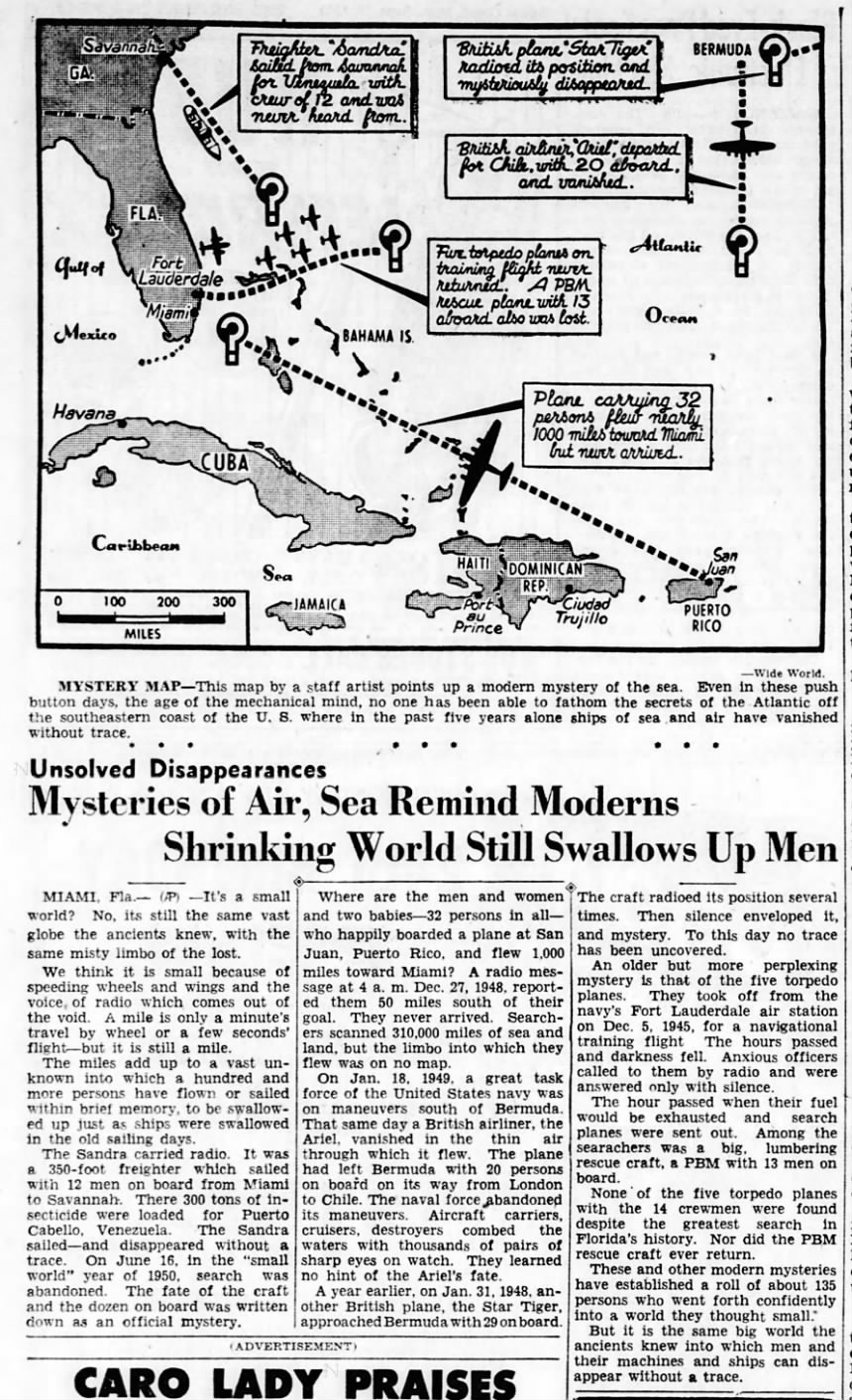
On 5 December 1945, Flight 19 — five U.S. Navy TBM Avenger torpedo bombers, 14 crewmen, on a routine training flight from NAS Fort Lauderdale — disappeared after radio transmissions in which Flight Leader Lt. Charles Taylor reported his compasses were malfunctioning. A PBM Mariner flying boat (BuNo 59225) with 13 crew dispatched to search disappeared the same evening. No wreckage from either flight has ever been recovered. Total loss: 27 men, 6 aircraft.
U.S. Navy Board of Investigation report, 5 December 1945 - 3 April 1946
-
On 30 January 1948, the British South American Airways Avro Tudor IV 'Star Tiger' (G-AHNP) disappeared en route from Santa Maria in the Azores to Bermuda with 31 souls aboard. On 17 January 1949, an identical aircraft, 'Star Ariel' (G-AGRE), disappeared between Bermuda and Kingston with 20 souls aboard. The Ministry of Civil Aviation's Star Tiger report concluded: 'What happened in this case will never be known.'
Ministry of Civil Aviation Star Tiger report (1948); Air Ministry Star Ariel report (1949)
-
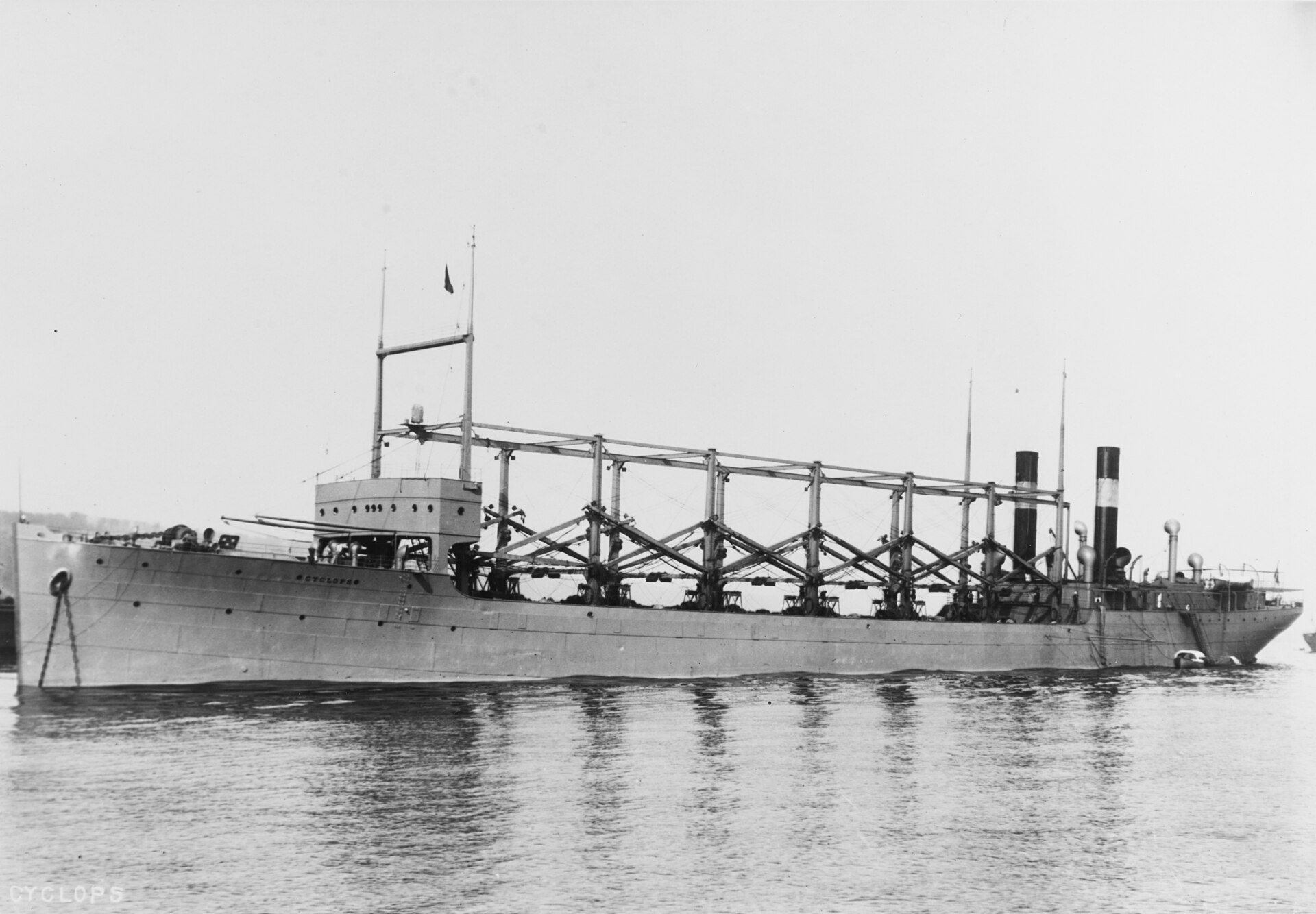
The USS Cyclops, a Navy collier with 306 souls aboard, disappeared in the region in March 1918 — the single largest non-combat loss of life in U.S. Navy history. No wreckage has been recovered.
U.S. Navy official record, USS Cyclops (AC-4)
Public-record imagery