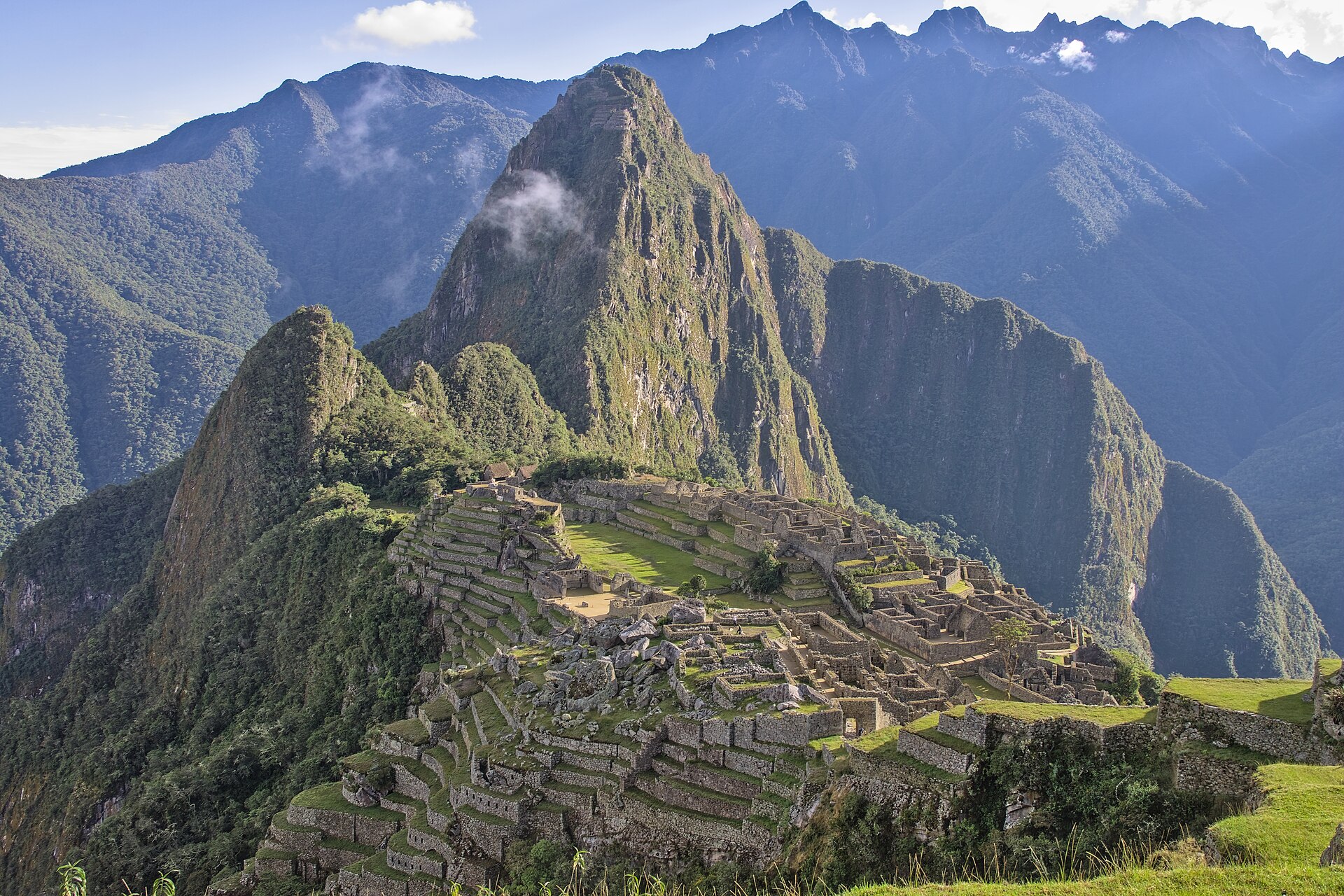
Machu Picchu & Inca Polygonal Masonry
A 15th-century Inca royal estate high in the Peruvian Andes, famed alongside the fortress of Sacsayhuamán for mortarless polygonal stonework fitted so tightly a knife blade cannot pass between the blocks.
Machu Picchu is a mid-15th-century Inca site at about 2,430 m elevation above the Urubamba Valley, generally attributed to the reign of the emperor Pachacuti (c. 1438–1471) and brought to wide attention by Hiram Bingham in 1911. It contains temples, terraces, and residences built in the Inca’s signature ashlar style: stones cut to fit without mortar. The nearby fortress-complex of Sacsayhuamán, overlooking Cusco, uses enormous polygonal limestone blocks, the largest weighing well over 100 tonnes, joined with the same precise interlocking fit. This masonry is highly earthquake-resistant.
On Ancient Aliens, commentators advancing the ancient-astronaut hypothesis claim the joints are too perfect, and the stones too heavy, for a culture without iron tools or the wheel, implying stone-softening rays, sonic levitation, or extraterrestrial cutting tools.
Archaeology contradicts this. The Inca worked stone with harder hammerstones, abrasive sand, bronze tools, and an iterative ‘pound, fit, and re-fit’ technique, and unfinished blocks, ramps, quarry sites, and abandoned stones along transport routes are all documented. Spanish chroniclers recorded the mit’a labor systems that mobilized tens of thousands of workers. The irregular polygonal shapes are in fact a sign of hand-fitting, not machining — each block was custom-dressed to its neighbors, which a mechanized or alien process would have had no reason to do.
Sources
Relationships
Supporting content