Göbekli Tepe conventional-explanation-suffices
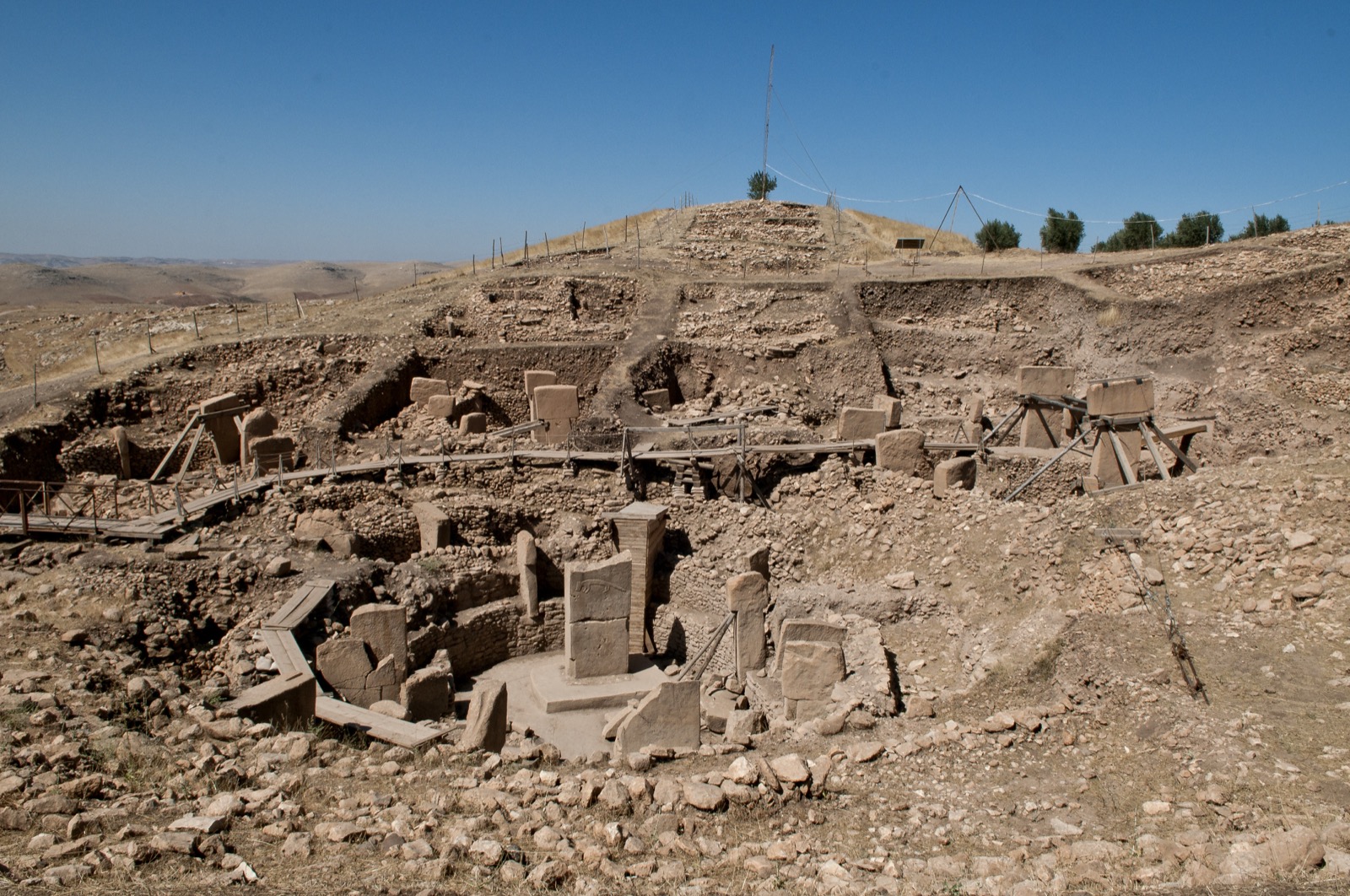
The world's oldest known monumental architecture — raised by hunter-gatherers ~11,500 years ago — and the cleanest example of a genuine human achievement being conscripted into ancient-astronaut and lost-civilization narratives.
Göbekli Tepe is the test case for the genre's core move. Everything the ancient-astronaut frame needs is here — great age, great size, real astonishment — and yet the mainstream account is not just adequate but revolutionary on its own terms. It shows that 'we can't believe humans did this' is an argument about the arguer, not the artifact.
Timeline
c. 9500 BCE
First monumental enclosures with T-shaped limestone pillars are raised during the Pre-Pottery Neolithic A — before pottery, metallurgy, writing, or farming.
primary source: German Archaeological Institute excavation reports
1963
The mound is noted in a joint Istanbul–Chicago survey but dismissed as a medieval cemetery; the carved pillars go unrecognised.
primary source: Survey of Southeastern Anatolia (1963)
1994–1995
Klaus Schmidt recognises the site's significance and begins systematic excavation for the German Archaeological Institute.
witnesses: Klaus Schmidt
primary source: Schmidt, excavation field reports
2014
Schmidt dies; work continues under Turkish and German institutions. Geophysics indicates at least 16 further unexcavated enclosures.
primary source: DAI / Şanlıurfa Museum
2018
Göbekli Tepe is inscribed as a UNESCO World Heritage Site.
primary source: UNESCO World Heritage List
Named personnel
- Klaus Schmidt — Excavation director (German Archaeological Institute) rank at time: Prehistorian primary witness to: Recognition and excavation of the enclosures (1995–2014)
Object — reported
shape
size
surface features
observed behaviors
Theories that invoke this case (1)
Its age and scale are cited as beyond hunter-gatherer capability, implying outside instruction; the carved pillars and putative astronomical alignments are read as encoded knowledge.
Theories that do NOT invoke this case — and why
The ETH concerns contemporary craft and contact; Göbekli Tepe is a deep-prehistory construction with no contemporary phenomenology attached.
Conventional explanations advanced — and their status
A communal ritual/gathering centre built by pre-agricultural hunter-gatherer bands — evidence that monumental cooperation preceded farming, inverting the old 'surplus first' model of social complexity. Recent work also finds signs of semi-permanent habitation.
proponents: Klaus Schmidt · German Archaeological Institute · mainstream Neolithic archaeology
Accepted. This is the genuinely paradigm-shifting reading, and it requires nothing non-human.
Where further investigation has leverage
- Excavation of the ~16 geophysically-indicated enclosures will further constrain chronology and function.
- Residue and use-wear analysis continues to test the ritual-only vs habitation readings — a question internal to archaeology, not requiring any exotic hypothesis.
Corpus status
conventional-explanation-suffices
A real and important site whose mainstream interpretation is both adequate and revolutionary. The ancient-astronaut and lost-civilisation readings add nothing the evidence demands; the site's own excavation team has largely rejected the 'observatory' claim. Filed as the clearest instance of wonder mistaken for proof.