Kenneth Arnold Sighting under-corroborated
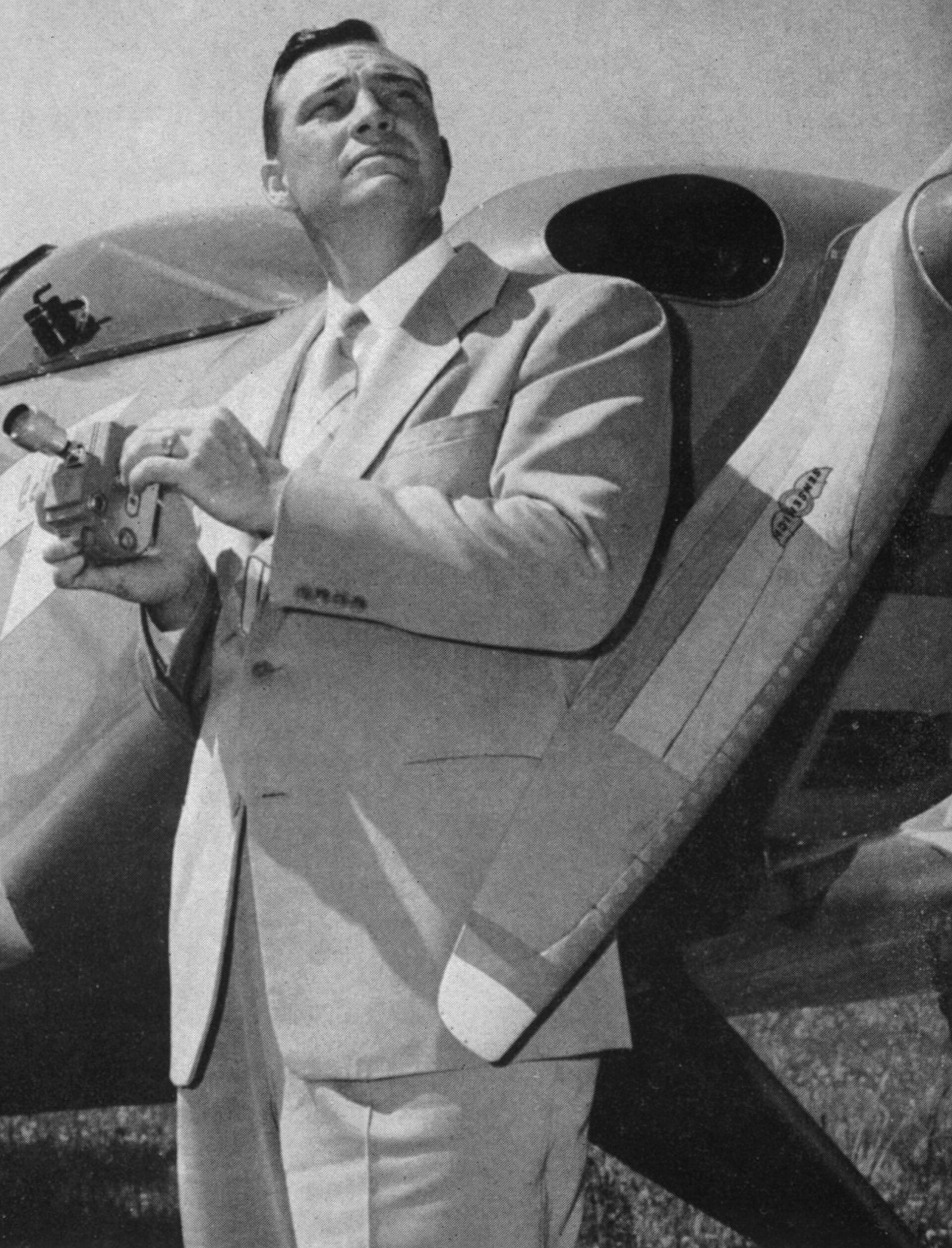
On the afternoon of 24 June 1947 the civilian pilot Kenneth Arnold,
flying near Mount Rainier, reported nine bright, flat, fast objects
moving in formation, which he timed and computed at on the order of
1,200–1,700 mph. His description of their motion — "like a saucer if
you skipped it across water" — was compressed by the press into the
noun "flying saucer," and the report is conventionally treated as the
opening event of the modern UFO era.
Arnold is the corpus's linguistic and institutional origin point. It
is not the best-evidenced case — it is a single-witness daylight
sighting with no instrument record — but almost everything downstream
descends from it: the word "saucer," the 1947 wave of hundreds of
copy-reports, Gen. Twining's September 1947 "the phenomenon is
something real" estimate, and the chain Project Sign → Grudge → Blue
Book. It is also the cleanest example in the record of a press frame
(a misread shape-vs-motion description) shaping the phenomenology of
everything that followed. The case earns its place by what it started,
not by what it proves.
Timeline
1947-06-24
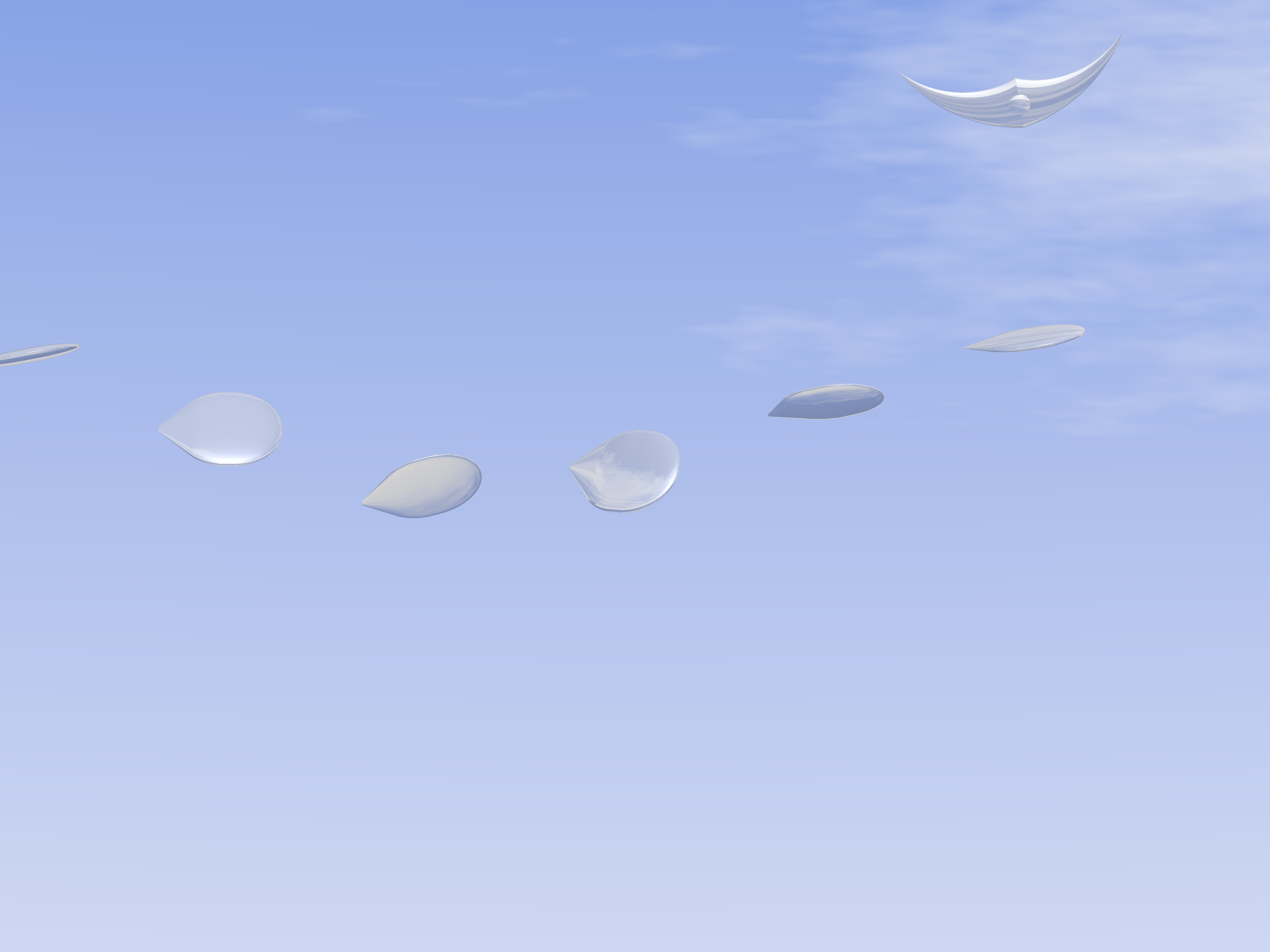
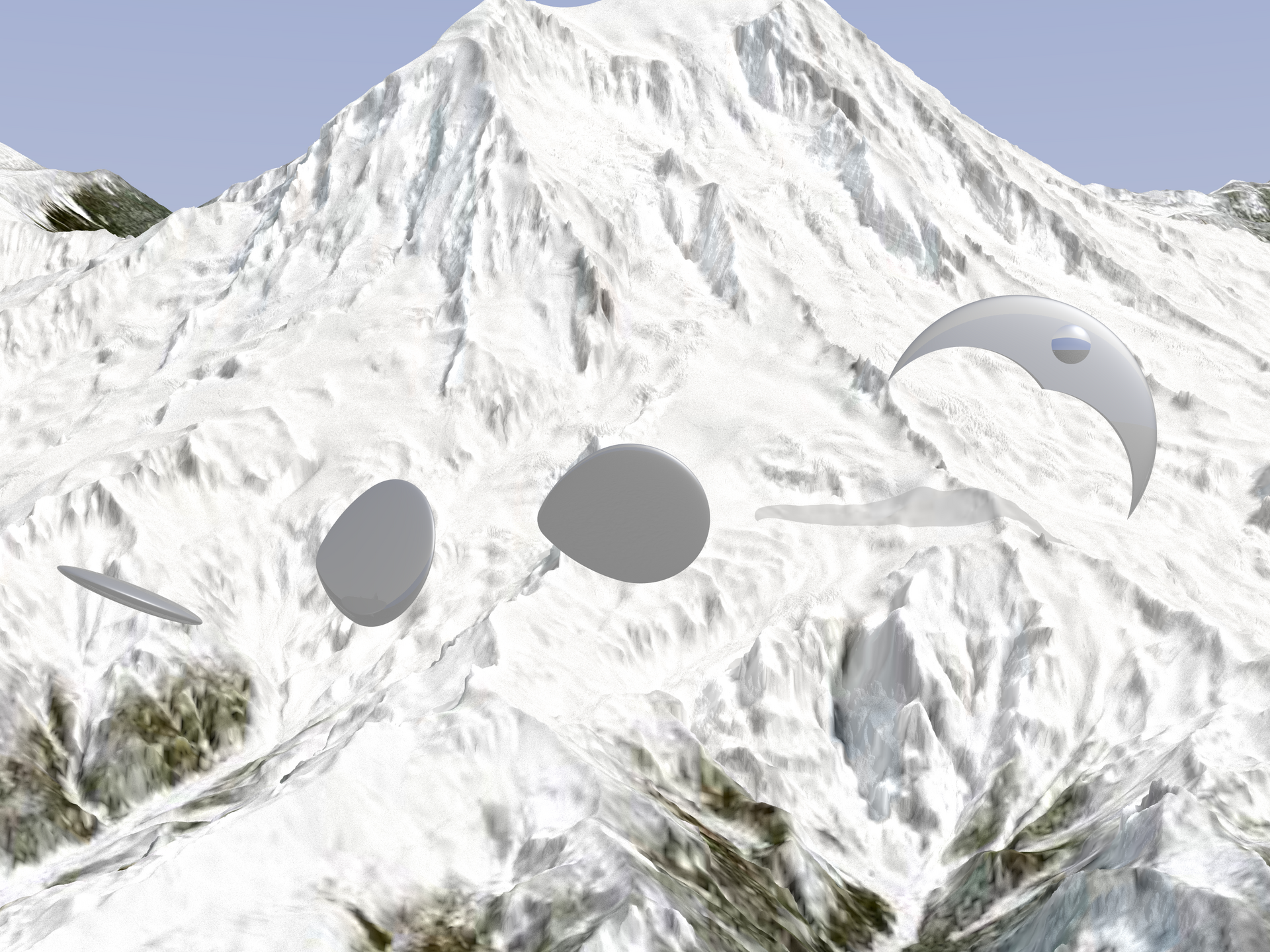
Arnold, en route from Chehalis toward Yakima (ultimately Boise) and
detouring to look for a crashed Marine C-46 carrying a reward, sees
nine bright objects between Mount Rainier and Mount Adams at roughly
3:00 p.m. He times their passage between the two peaks at 1 minute
42 seconds on his instrument-panel clock. The objects fly in a
diagonally stepped (echelon) line strung out over several miles,
flipping and banking in unison and throwing mirror-like flashes.
witnesses: Kenneth Arnold (pilot, sole primary witness)
primary source: Arnold's account as reported by the East Oregonian and reconstructed in Shough's NICAP monograph
1947-06-25
Arnold reaches Pendleton, Oregon and is interviewed by Bill
Bequette and Nolan Skiff of the East Oregonian. Bequette's first
article describes "nine saucer-like aircraft flying in formation"
and puts the story on the Associated Press wire, where it explodes
nationally within a day.
witnesses: Bill Bequette (East Oregonian reporter) · Nolan Skiff (East Oregonian columnist)
primary source: East Oregonian, 25 June 1947; Seattle Times 70-year retrospective (2017)
1947-06-26
Early headline uses of "flying saucer" appear (a Chicago Sun
headline is often cited). In a same-period radio interview Arnold
describes the objects as "like a pie plate that was cut in half with
a sort of convex triangle in the rear" — a crescent/heel shape, not
a disc. The shape-vs-name discrepancy dates from this moment: Arnold
always maintained "saucer" referred to the skipping MOTION, not the
outline.
primary source: Wikipedia (citing Strentz, Clark); Smithsonian NASM 1947 overview
1947-07-04
A United Airlines crew (Capt. E. J. Smith and others) reports five
to nine disc-like objects pacing their aircraft over Idaho. It is
treated as the most-cited corroborator of the Arnold wave and is
folded into the early official record.
primary source: Wikipedia; contemporary press
1947-07-12_approx
Army Air Force intelligence officers Lt. Frank Brown and Capt.
William Davidson interview Arnold; their report states "Mr. Arnold
actually saw what he stated he saw." The same officers were drawn
into the Maury Island affair and died on 1 August 1947 when their
B-25 crashed near Kelso, Washington — an accident later entangled
with the (hoax) Maury Island claims.
primary source: Wikipedia (Maury Island incident); Ruppelt
1947-09-23
Gen. Nathan Twining's Air Materiel Command estimate concludes the
phenomenon "is something real and not visionary or fictitious,"
urging formal study. This catalyzes Project Sign (1947–49), the
first official U.S. UFO investigation and the ancestor of Project
Blue Book.
primary source: Twining memo, 23 Sept 1947; Ruppelt, The Report on UFOs
1949-04
Arnold's Saturday Evening Post article "What You Can Believe About
Flying Saucers" affirms his view that the objects were craft of a
design "unknown to the civilization of this earth." Donald Menzel
later publishes a succession of mutually inconsistent debunking
explanations (snow, wave clouds, water spots on the canopy) across
1953–1971.
primary source: Saturday Evening Post, April 1949; Menzel 1953/1963/1971
Named personnel
- Kenneth Arnold — Pilot and sole primary witness; civilian fire-suppression-equipment businessman, experienced private pilot based in Boise, Idaho rank at time: civilian · later: Investigated the Maury Island hoax at Ray Palmer's urging; interviewed by Edward R. Murrow (CBS, 1950); lifelong proponent that the objects were genuine craft primary witness to: the nine objects and their timed transit Rainier→Adams
- Bill (Nolan) Bequette — East Oregonian reporter who interviewed Arnold on 25 June and put the account on the AP wire rank at time: role: the journalist whose phrasing made the story national and seeded the 'saucer' coinage
- Gen. Nathan Twining — Head of Air Materiel Command; author of the 23 Sept 1947 estimate that the phenomenon was 'something real' rank at time: role: the case's institutional consequence — his estimate catalyzed Project Sign
- Maj. Edward J. Ruppelt — Later head of Project Blue Book; documented the Project Sign internal debate rank at time: · later: Called the Maury Island affair 'the dirtiest hoax in UFO history' role: the corpus's main institutional narrator for the 1947–52 period
- Raymond A. Palmer — Amazing Stories / Fate editor who recruited Arnold to investigate Maury Island rank at time: role: the publishing figure who helped convert the sighting into a durable cultural phenomenon
Sensor record
- Mark 1 eyeball + instrument-panel clock on Kenneth Arnold's CallAir A-2 at ~9,200 ft visual observation of nine objects; transit Rainier→Adams timed at 1 min 42 s, the only quantitative datum in the case documentation: Arnold's own account and sketches; no photographic, radar, or third-party instrument record exists
Object — reported
shape
thin, flat, crescent / 'heel'-shaped with a convex trailing edge ('a pie plate cut in half'); one object reportedly differing from the other eight. NOT the round disc the word 'saucer' implies — that is the central distortion of the case.
size
Arnold's angular estimate implied roughly 45–100 ft; AAF analysts working from visual-acuity assumptions back-estimated ~140–280 ft. The wide spread reflects an unknown range — every size figure is distance-dependent and uncertain.
surface features
smooth, highly reflective; no wings, tails, fuselages, or exhaust trails reported
observed behaviors
- flight in a diagonally stepped (echelon) formation strung over several miles
- flipping and banking in unison, throwing bright mirror-like flashes
- weaving 'like the tail of a Chinese kite'; darting around the peaks
- the skipping, dipping motion Arnold likened to 'a saucer skipped across water' — the source of the name, describing MOTION not shape
- computed speed of ~1,200 mph (Arnold's deliberately conservative figure) up to ~1,660–1,760 mph (straight-line geometric reconstruction); all figures depend on an unmeasured range
Theories that invoke this case (3)
The founding ETH case. Arnold's own post-1947 position — craft of
a design unknown to terrestrial engineering — and the speeds he
computed (beyond 1947 aircraft) make it the symbolic first data
point of the extraterrestrial reading, even though the evidence is
a single visual account.
The strongest structural reading. Arnold described crescent objects
with disc-like motion; the press coined "flying saucer" (a shape)
and the subsequent wave overwhelmingly reported discs. The case is
the cleanest demonstration in the record of a media frame generating
the phenomenology it claims to describe.
The atmospheric-optics reading invokes Arnold as a candidate mirage
/ inversion-reflection event (developed quantitatively by Steuart
Campbell), in which near-stationary highlights over the valleys
moved at the observer's own ground speed.
Theories that do NOT invoke this case — and why
no associated phenomenology (no entities, missing time, witness disorientation) — a pure distant-aerial-object report
no entity or creature observed
the case lacks the close-range instrumented record the crypto-physicalist reading wants; it rests entirely on one witness's distance estimate
Conventional explanations advanced — and their status
Mirage / temperature-inversion reflections moving at the observer's ground speed
proponents: Air Force (eventual public conclusion) · Steuart Campbell
A leading skeptical candidate. Contested because Arnold reported tracking the objects between two named peaks and watching them pass behind/around terrain, which a stationary mirage does not do.
Blown snow, orographic 'wave' clouds, or water spots on the cockpit canopy
proponents: Donald Menzel (1953, 1963, 1971 — three different versions)
Weak precisely because Menzel kept changing it; Arnold stated he had ruled out canopy reflections by rolling a window down.
A flock of American White Pelicans (large wingspan, pale reflective undersides, crescent soaring profile)
proponents: James Easton · discussed by Robert Sheaffer
A serious candidate for the flashing and crescent appearance; strained by the computed speeds and Arnold's reported angular sizes. Derided in ufology as 'Pelicanism.'
Meteors / fireballs
proponents: Philip J. Klass
Minority skeptical view; hard to reconcile with a ~100-second horizontal traverse and nine discrete formation-keeping objects.
A formation of conventional jet aircraft (e.g., P-80s)
proponents: some Project Sign analysts; local base officers
Weak — no formation of nine matching jets is documented in the area, and the implied speeds exceed 1947 aircraft.
Where further investigation has leverage
- Independent ranging of the objects — every speed and size figure collapses without a known distance. Surveyed lines of sight from corroborating ground observers (e.g., the Diamond Gap fire-watch tower) could in principle triangulate range, but the surviving logs are too thin.
- Recovery of Arnold's original sketches and the unedited Project Sign file, to fix exactly what shape and size he reported before press contamination — settling the motion-claim vs shape-claim question definitively.
- Atmospheric reconstruction (radiosonde / inversion data) over the Cascades for 24 June 1947, to test the mirage hypothesis quantitatively rather than rhetorically.
- An ornithological assessment of White Pelican presence, altitude, and flock behavior in that corridor in late June, to confirm or kill the bird hypothesis.
Corpus status
under-corroborated
A single-witness daylight visual sighting with no instrument record.
The witness was judged credible by contemporary investigators, but
every quantitative claim (speed, size) is distance-dependent and not
independently measurable, and each conventional candidate (mirage,
birds, misjudged aircraft) founders on one or more reported parameters
while the "unknown" reading rests on parameters that cannot be checked.
The case's weight in the corpus is historical and linguistic, not
evidentiary: it is where the vocabulary and the institutions began.
status history (1)
2026-06-09 · unannotated → under-corroborated
— initial annotation sweep (Epic J.F4)
Suggested watching
episode · 1998 · History / various / YouTube
Kenneth Arnold's UFO Sighting
Reconstruction of June 24 1947 — the flight path, the nine objects, the East Oregonian press conference that coined 'flying saucer.'
Threads of evidence
This case is one node in the connections that run across the record. It appears in 2 threads:
The Blue Book / Hynek investigative spine
— The case that created the machine: the 1947 wave it triggered produced Twining's 'something real' estimate and Project Sign, Blue Book's grandparent.
The pre-saucer lineage
— The naming event: the press coined 'flying saucer' from Arnold's motion description, and the prehistory became the modern era.