Mantell Incident historically-pivotal-explained
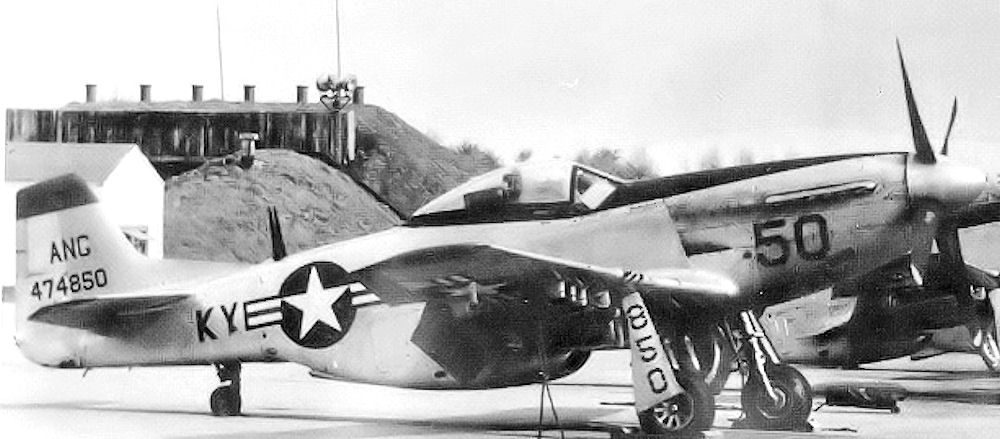
On 7 January 1948 Capt. Thomas F. Mantell, a 25-year-old Kentucky Air
National Guard pilot, died when his F-51 Mustang crashed after he
climbed without oxygen equipment in pursuit of a large, bright object
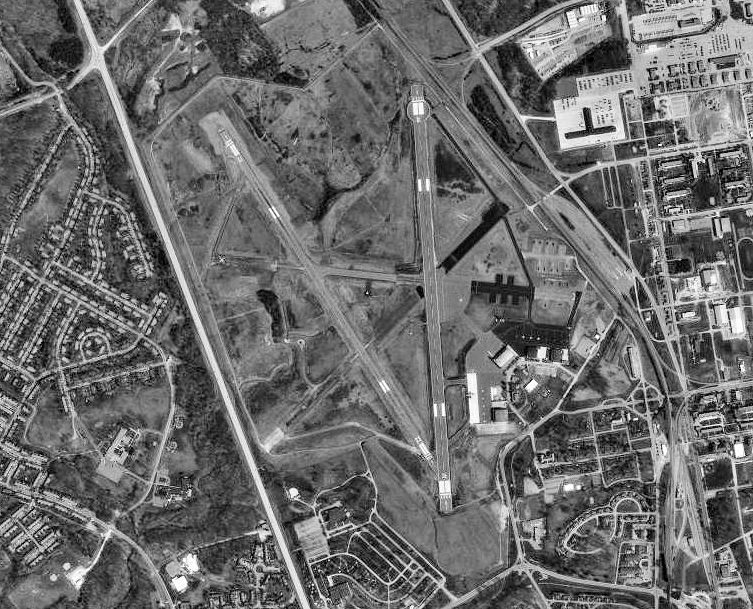
seen from Godman Field at Fort Knox. He is generally cited as the
first person killed in connection with a UFO sighting; the object is
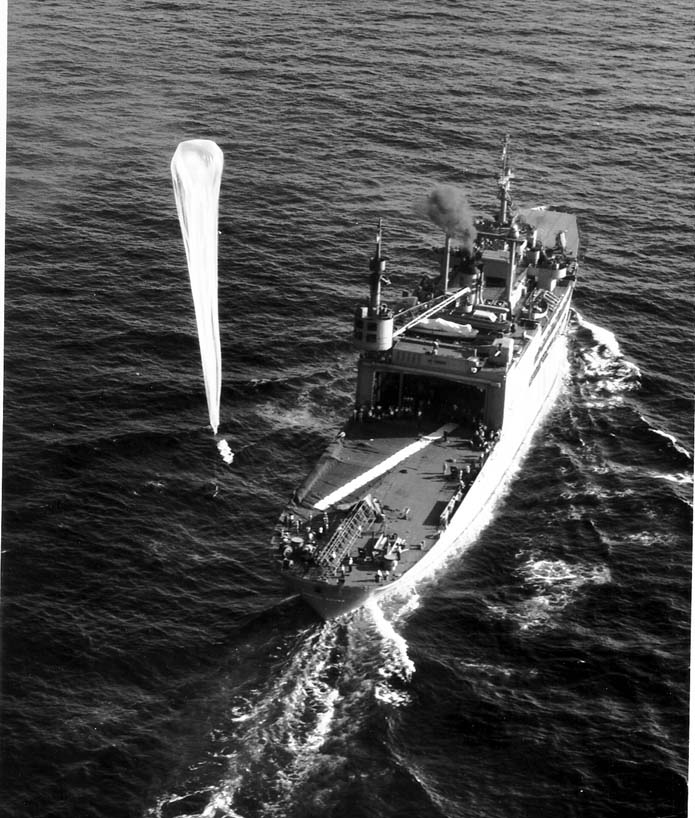
now most widely attributed to a then-secret Navy Skyhook high-altitude
balloon, though no specific balloon was ever positively traced to it.
Mantell is the corpus's cautionary keystone: the case that injected
fear into the six-month-old "flying saucer" era and seeded the durable
folklore of hostile, deadly UFOs. It is also the cleanest early
example of the corpus's central method — distinguishing the documented
core (a hypoxia death; a real but secret balloon program that fits) from
the embellishments that grew on it (the "metallic and tremendous"
quote no controller could actually confirm; rumors of magnetized,
irradiated wreckage). One of Ruppelt's three "classic" 1948 cases, and
an early test of Project Sign, the first official U.S. UFO study.
Timeline
1948-01-07_1315
Godman Field's control tower receives a relay from the Kentucky
State Highway Patrol about an unusual aerial object reported over
towns to the west; reports place it moving westerly past Owensboro
and Irvington. Within ~30 minutes the tower operators visually
acquire the object and judge it neither an aircraft nor a weather
balloon.
witnesses: T/Sgt. Quinton Blackwell (Godman tower operator) · Col. Guy F. Hix (base commander, observed the object)
primary source: Ruppelt (1956), ch. 3; U.S. Army 75th-anniversary article (2023)
1948-01-07_1430
Four F-51D Mustangs of the 165th Fighter Squadron, already aloft,
come into view; the tower asks flight leader Capt. Thomas Mantell to
investigate. Mantell radios that he sees the object above and ahead
and is closing. The much-quoted line "it looks metallic and it's
tremendous in size" is attributed to him in popular accounts, but
Ruppelt records that the controllers could not agree on his exact
words — it is popularized, not verbatim-confirmed.
witnesses: Capt. Thomas F. Mantell (flight leader, pilot) · 1st Lt. Albert Clements and 2nd Lt. B. A. Hammond (wingmen)
primary source: Ruppelt (1956); Wikipedia
1948-01-07_climb
Mantell's two wingmen break off near ~22,000 ft for lack of oxygen;
a third aircraft had peeled away to Standiford Field. Mantell, whose
flight was not equipped for sustained high-altitude flight, continues
to climb alone after the object.
primary source: U.S. Army article; Vintage Aviation News
1948-01-07_1518
Mantell blacks out from hypoxia at high altitude; his aircraft
spirals down and breaks up, crashing on a farm south of Franklin,
Kentucky. His wristwatch stopped at 3:18. The canopy lock was
reportedly in place — he did not bail out. Sensational later claims
(body found outside the aircraft, "magnetized" wreckage) are
debunked.
primary source: This Day in Aviation; Wikipedia
1948-01_after
"Almost before the rescue crews had reached the crash, the word
'Venus' went out" (Ruppelt): Venus is offered as the immediate
explanation. It fails — the sighting was in mid-afternoon daylight
and Venus was far too faint. J. Allen Hynek, who proposed it,
retracts it by ~1952.
primary source: Ruppelt (1956); Wikipedia
1952
Project Blue Book, under Ruppelt, reidentifies the object as a Navy
Skyhook high-altitude research balloon — a program classified in
1948, which is precisely why it could not have been the
contemporaneous answer. Vanderbilt astronomer Carl Seyfert's
telescopic report of "a pear-shaped balloon with cables and a basket"
supports it. Ruppelt notes candidly that the specific balloon was
never found.
primary source: Ruppelt (1956); Wikipedia (Skyhook balloon)
Named personnel
- Capt. Thomas F. Mantell Jr. — Flight leader, 165th Fighter Squadron, Kentucky Air National Guard; the pilot who died rank at time: Captain · later: WWII C-47 pilot decorated for the D-Day Normandy drops; ~2,867 total flight hours but only ~67 in the F-51D primary witness to: the airborne pursuit of the object
- Col. Guy F. Hix — Godman Field base commander; observed the object, describing it as 'very white... like an umbrella with a red top' rank at time: primary witness to: the ground visual from the tower
- T/Sgt. Quinton Blackwell — Godman tower operator; described an 'ice cream cone'-like object rank at time: primary witness to: the tower observation and Mantell's radio transmissions
- Dr. J. Allen Hynek — Astronomer and Project Sign scientific consultant who proposed the Venus explanation, then retracted it rank at time: role: the source of the discredited first explanation
- Dr. Carl K. Seyfert — Vanderbilt astronomer who reported a telescopic view of a balloon-like object with cables and a basket rank at time: role: key support for the Skyhook explanation
- Capt. Edward J. Ruppelt — Head of Project Blue Book; reinvestigated the case, got Venus retracted, and endorsed Skyhook rank at time: · later: Noted in print that the specific balloon was never traced — the corpus's model of a hedged official role: the case's principal investigator and narrator
Sensor record
- Mark 1 eyeball — ground (Godman tower) + airborne (P-51 cockpit) on Godman Field control tower and four F-51D Mustangs a large bright object visible for roughly an hour-plus; no radar, photographic, or other instrument record of the object itself exists documentation: tower personnel statements; Mantell's radio reports (exact words disputed)
- Astronomical telescope on Vanderbilt University (Carl Seyfert) a 'pear-shaped balloon with cables and a basket attached' — the observation most consistent with the Skyhook reading documentation: Seyfert report cited in Ruppelt and Wikipedia
Object — reported
shape
described variously as round, a parachute, an 'ice cream cone topped with red', and 'an umbrella with a red top' — i.e. a large bright object with a reddish upper feature, consistent with sunlit reflective balloon material
size
estimated ~250–300 ft across on a second tower report; size estimates are unanchored by any range measurement
surface features
very white / bright, reflective; a red or reddish cap noted by several observers
observed behaviors
- near-stationary or very slowly drifting for an extended period — consistent with a high-altitude balloon, not a maneuvering craft
- remained at altitudes a non-pressurized, non-oxygen-equipped P-51 could not safely reach
- no reported acceleration, sharp maneuver, or evasive behavior — the object simply stayed high while Mantell climbed toward it
Theories that invoke this case (3)
The explanation the corpus endorses: the object was the wreckage of
a classified U.S. program (Project Skyhook), invisible to 1948
observers and investigators precisely because it was secret. The
whole tragedy is an artifact of Cold War compartmentation.
The folkloric reading: a military pilot died pursuing an
unidentified craft, and the "metallic and tremendous" framing was
taken as evidence of a solid, possibly hostile object. The corpus
records that this rests on a quote no controller could confirm.
The case as myth-growth: the death converted the six-month-old
saucer enthusiasm into fear, and lurid rumors (irradiated,
magnetized wreckage; an alien attack) accreted onto a mundane
hypoxia accident — a documented instance of narrative outrunning fact.
Theories that do NOT invoke this case — and why
no associated phenomenology beyond a distant high object; nothing about the event resists a physical-object reading
the leading explanation is a known (if then-secret) human technology, not an unexplained physical anomaly
no entity or creature observed
Conventional explanations advanced — and their status
The planet Venus
proponents: J. Allen Hynek / Project Sign (January 1948)
Rejected, including by Hynek himself by ~1952. The sighting was in mid-afternoon daylight and Venus was far too faint to be the bright, sustained object multiple trained observers tracked.
A Navy Skyhook high-altitude research balloon
proponents: Capt. Edward Ruppelt / Project Blue Book (1952) · supported by Carl Seyfert's telescopic observation
The consensus best explanation. Skyhooks were ~100 ft, reflective polyethylene, rose to ~100,000 ft and drifted slowly — sunlight on one would look bright, metallic, enormous, and nearly stationary, matching every reported feature. But Ruppelt acknowledged the specific balloon over Kentucky that day was never located, so the standing is 'highly probable,' not 'proven.'
A genuine unidentified or extraterrestrial craft
proponents: UFO proponents; popular retellings
Rejected by mainstream researchers and skeptics alike; survives as folklore. Nothing in the reported behavior (a high, slow, non-maneuvering bright object) requires an exotic explanation.
Where further investigation has leverage
- A documented Skyhook launch record — site, date, and trajectory — placing a specific balloon over central Kentucky on the afternoon of 7 January 1948. This is the single missing link; Ruppelt explicitly could not find it. Declassified ONR / General Mills launch logs from late 1947–early 1948 could be decisive.
- The original tower transcript or accident-board record of Mantell's actual radio words, to settle whether 'metallic and tremendous in size' was real or a later embellishment.
- The full Project Sign / accident-investigation file with the medical examiner's report and altimeter/wreckage analysis, to fix the blackout altitude and confirm the hypoxia reconstruction.
Corpus status
historically-pivotal-explained
The firmly established core is a fatal hypoxia accident: a pilot with no
oxygen equipment climbed after a high, bright, slow object he could not
safely reach, blacked out, and crashed. The object is best explained as a
then-classified Skyhook balloon — a reconstruction that fits every
reported feature but was never confirmed by tracing the specific balloon.
The famous "metallic and tremendous" quote is not verbatim-confirmed, and
the magnetized/irradiated-wreckage rumors are debunked. Historically
pivotal as the first UFO death and the origin of the hostile-UFO
folklore; substantially, though not absolutely, explained.
status history (1)
2026-06-09 · unannotated → historically-pivotal-explained
— annotated before the 2026-06-09 sweep; history begins at seeding
Threads of evidence
This case is one node in the connections that run across the record. It appears in 1 thread: