The Nazca Lines conventional-explanation-suffices
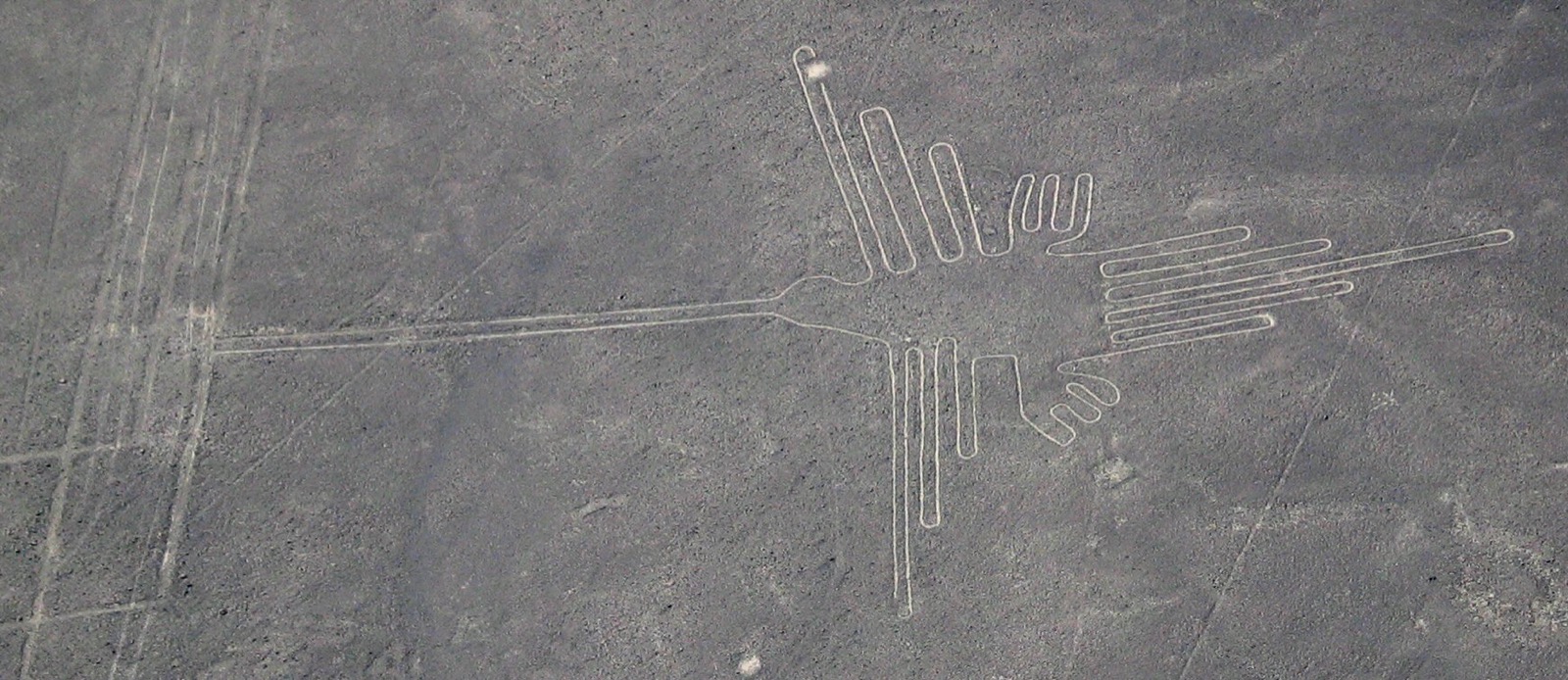
Hundreds of desert geoglyphs by the Nazca culture, made famous to the ancient-astronaut audience by von Däniken's 'alien runway' reading — and reproduced at full scale by a skeptic with stakes and cord in days.
The Nazca Lines carry the genre's most testable claim ('you'd need to see them from the air') and its most decisive refutation (a small team made one without aerial help). They are the place to show that the ancient-astronaut argument is not merely unproven but experimentally falsified — and that its own founder walked it back.
Timeline
c. 500 BCE – 500 CE
The Nazca culture (with an earlier Paracas phase) creates the geoglyphs by removing iron-oxide surface stones to expose pale subsoil 10–15 cm beneath.
primary source: Andean archaeology; Nazca-culture chronology
1940s–1990s
Maria Reiche maps and preserves the lines over decades, proposing astronomical and calendrical functions.
witnesses: Maria Reiche
primary source: Reiche, Mystery on the Desert
1968
Erich von Däniken's Chariots of the Gods? presents the long straight lines as landing strips for spacecraft.
witnesses: Erich von Däniken
primary source: Chariots of the Gods? (1968)
1982
Joe Nickell and a small team reproduce a full-size Nazca figure using only stakes and cord, with no aerial assistance, in days.
witnesses: Joe Nickell
primary source: Nickell, 'The Nazca Drawings Revisited' (Skeptical Inquirer)
Named personnel
- Maria Reiche — Mathematician and Nazca researcher rank at time: Independent scholar primary witness to: Decades of mapping and preservation of the geoglyphs
- Joe Nickell — Investigator / skeptic rank at time: CSICOP investigator primary witness to: Experimental full-scale reproduction of a Nazca figure (1982)
Object — reported
shape
size
surface features
observed behaviors
Theories that invoke this case (1)
Von Däniken read the straight lines as spacecraft runways and the figures as signals to the sky, arguing they make sense only when viewed from above.
Theories that do NOT invoke this case — and why
The 'runway' claim is deep-time and structural, not a contemporary sighting; and runways require graded hard surfaces, not shallow scrapes in soft ground.
Conventional explanations advanced — and their status
Ritual and possibly astronomical/calendrical works of the Nazca culture, made with simple survey methods (stakes, cord, scaling from small models). Visibility from the air is irrelevant to their making or their likely ceremonial use.
proponents: Maria Reiche · Joe Nickell · mainstream Andean archaeology
Accepted.
Where further investigation has leverage
- Ongoing aerial/LiDAR survey keeps discovering additional figures — extending, not mystifying, the Nazca-culture corpus.
- Wider circulation of Nickell's reproduction (and von Däniken's own retraction) closes the 'needs aerial viewing' argument.
Corpus status
conventional-explanation-suffices
Von Däniken himself conceded the lines could have been laid out from a model using coordinates; Nickell reproduced one at full scale without aerial help. A clean case of an ancient-astronaut claim that is not just unsupported but experimentally falsified.