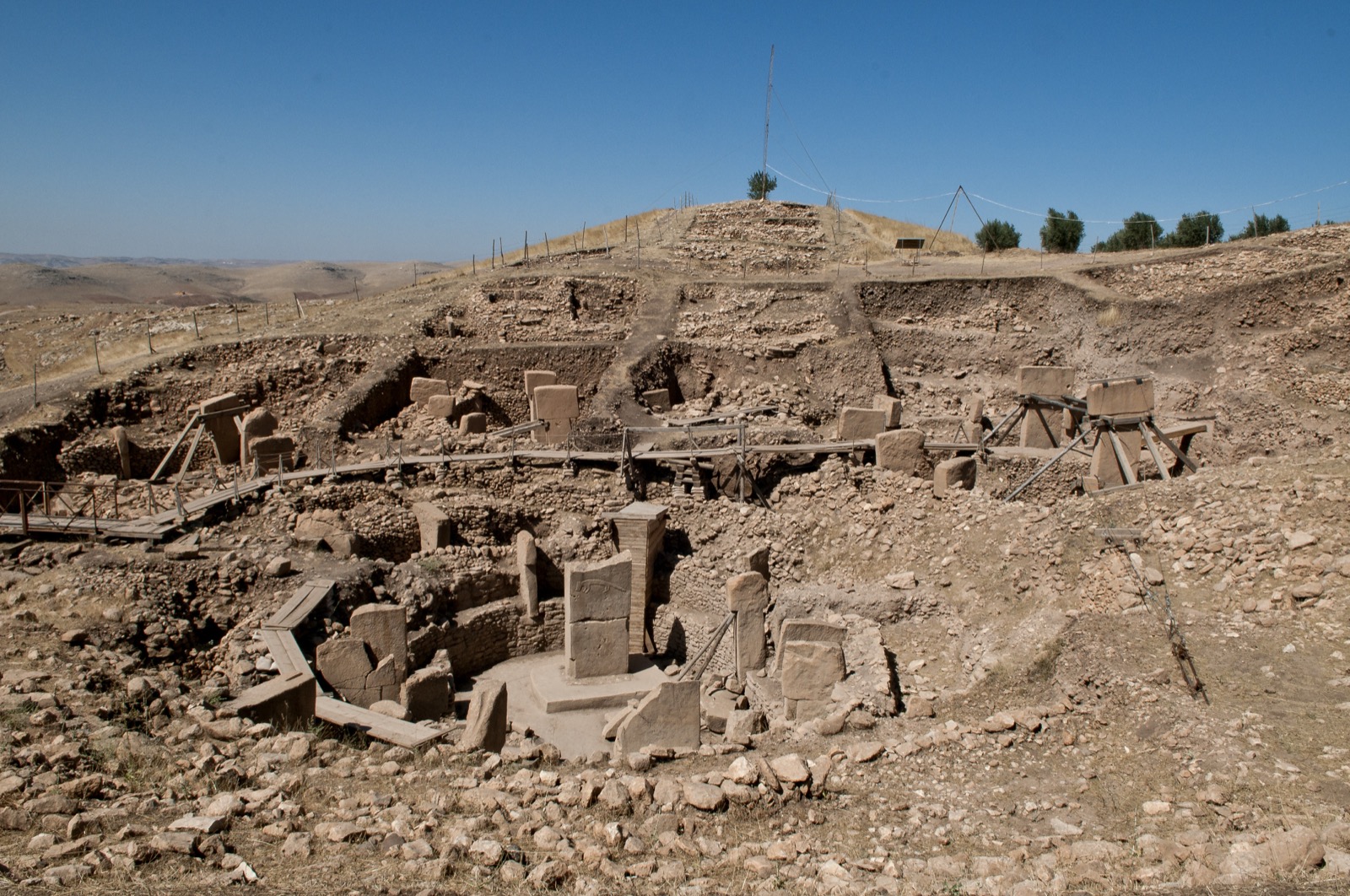
Göbekli Tepe
An 11,500-year-old megalithic sanctuary in southeastern Turkey (PPNA, c. 9500–8000 BCE) built by hunter-gatherers — genuinely paradigm-shifting archaeology, frequently and wrongly conscripted into ancient-astronaut and lost-civilization narratives.
Göbekli Tepe, in Şanlıurfa Province in southeastern Turkey, is one of the most important archaeological discoveries of the last century. Built in the Pre-Pottery Neolithic (c. 9500–8000 BCE), it is among the world’s oldest known megalithic sites — its T-shaped limestone pillars, set in circular enclosures and carved with foxes, boars, snakes, and vultures, predate pottery, metal, writing, and agriculture. The German archaeologist Klaus Schmidt recognized the site in 1994 and excavated it from 1995 until his death in 2014; work continues under Turkish and German institutions, and it became a UNESCO World Heritage Site in 2018.
Its genuine significance is that monumental construction preceded farming — hunter-gatherers organized to raise it, inverting the old assumption that agriculture and settled surplus had to come first. That is a real revolution in prehistory, and it needs no help from outside Earth.
Precisely because it is old, large, and astonishing, Göbekli Tepe is a magnet for alternative narratives — alien builders, an Atlantis-style lost civilization, an astronomical “observatory.” The claim of an observatory has been largely rejected by the site’s own excavation team, and there is no evidence of non-human involvement. The corpus files it as the cleanest case of the genre’s core error: a real human achievement, conscripted into the ancient-astronaut narrative as if wonder were proof of visitors.
Sources
Relationships
Supporting content