Coyne / Mansfield Army Helicopter Incident (18 October 1973) phenomenologically-open
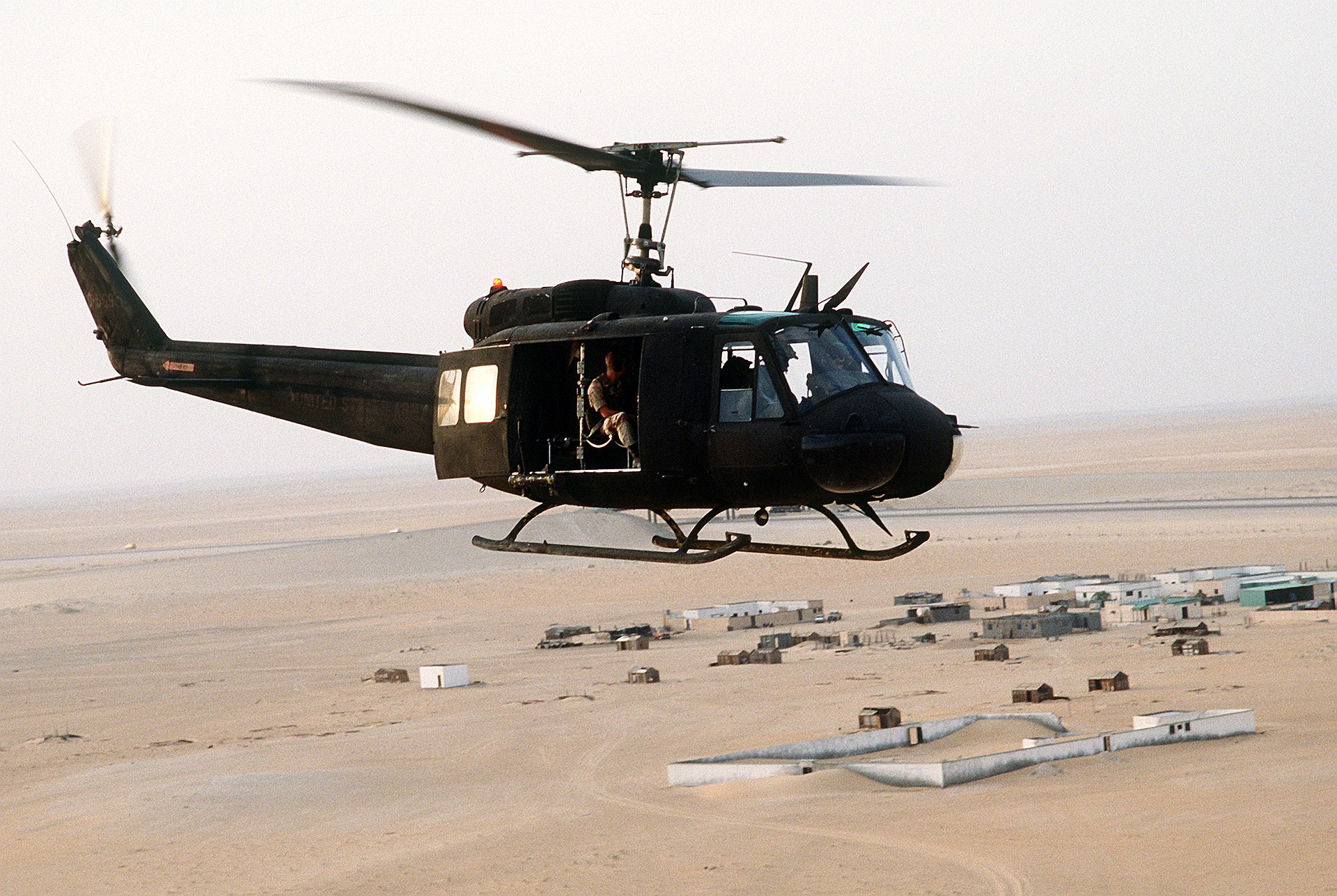
An Army Reserve UH-1H 'Huey' crewed by Capt. Lawrence Coyne and three
others was nearly struck by a cigar-shaped object over Mansfield, Ohio on
18 October 1973. By the crew's account the object bathed the cockpit in a
green beam, killed the radios, and — though the collective was set to
descend — the helicopter climbed more than a thousand feet with no input.
Civilians on the ground saw it too.
Coyne/Mansfield is the electromagnetic-effects thread's purest 'effect-on-
the-aircraft' case: not a stalled car or a burned witness, but a 9,000-lb
helicopter that, set to descend, instead ascended over a thousand feet
with the controls in the descent position — alongside dual-band radio
failure and a compass that spun out. It is exceptionally well-witnessed:
four military aircrew with consistent accounts, plus an independent group
of civilian ground witnesses who saw the helicopter and the object
together. It is among the hardest close-encounter cases in the corpus to
reduce to misperception.
Timeline
1973-10-18T23:02-0400_approx
An Army Reserve Bell UH-1H Iroquois, returning from Columbus to
Cleveland, cruises at ~2,500 ft AGL south of Mansfield, Ohio. The crew:
Capt. Lawrence J. Coyne (commander/pilot), 1st Lt. Arrigo Jezzi
(copilot), Sgt. John Healey (crew chief), SSgt. Robert Yanacsek (medic).
Yanacsek reports a single steady red light to the east, pacing the
aircraft.
witnesses: Capt. Lawrence J. Coyne · 1st Lt. Arrigo Jezzi · Sgt. John Healey · SSgt. Robert Yanacsek
primary source: crew statements; Jennie Zeidman APRO report
1973-10-18T23:04-0400_approx
The red light closes rapidly on a collision course. Coyne puts the
helicopter into a steep dive (~500 ft/min, then faster) and braces for
impact. The object — a cigar/dome-shaped gray metallic craft — halts and
hovers directly in front of and above the aircraft, filling the
windshield.
witnesses: Coyne, Jezzi, Healey, Yanacsek
primary source: crew statements
1973-10-18T23:05-0400_approx
A sweeping green beam from the object passes through the cockpit,
bathing the crew in green light. The VHF and UHF radios both fail
(transmit and receive dead). Coyne notes the magnetic compass disk
spinning roughly four times faster than normal (the compass is later
found ruined).
witnesses: Coyne, Jezzi, Healey, Yanacsek
primary source: crew statements; the damaged compass
1973-10-18T23:06-0400_approx
Although the collective pitch control is still set in the descent
position (and Coyne reports it has not been raised), the altimeter shows
the helicopter climbing at ~1,000 ft/min, from ~1,700 ft up through
~3,500 ft, with a slight 'bump' felt at the top. The object then
accelerates away to the west/northwest.
witnesses: Coyne, Jezzi, Healey, Yanacsek
primary source: crew statements
1973-10-18T23:07-0400_approx
The radios recover after the object departs. The crew regains normal
control and continues to Cleveland, reporting the event on landing.
primary source: crew statements; Army reporting
1973-10-18_same_night
Independently, a family driving near Mansfield — later interviewed by
investigators — reports seeing both the helicopter and a bright object
with a green light over it, corroborating the aircrew from the ground.
witnesses: the Mansfield ground-witness party (a woman and children)
primary source: Jennie Zeidman APRO investigation
1973-1976
APRO investigator Jennie Zeidman conducts a detailed investigation and
publishes a monograph treating the case as a credible unexplained
multi-witness event. Coyne later recounts the incident in connection
with the 1978 United Nations UFO discussions.
witnesses: Jennie Zeidman (investigator)
primary source: Zeidman, 'The Coyne Helicopter Incident' (APRO/CUFOS)
Named personnel
- Capt. Lawrence J. Coyne — Aircraft commander / pilot, Army Reserve UH-1H rank at time: · later: Recounted the case on the record, including in connection with the 1978 UN UFO discussions primary witness to: the near-collision, the green beam, the radio failure, and the uncommanded climb
- 1st Lt. Arrigo Jezzi — Copilot rank at time: primary witness to: the object and the instrument/radio anomalies
- Sgt. John Healey — Crew chief rank at time: primary witness to: the object and the green beam
- SSgt. Robert Yanacsek — Flight medic; first to spot the red light rank at time: primary witness to: the object's approach and hover
- Mansfield ground-witness party — Independent civilian witnesses on the ground rank at time: primary witness to: the helicopter and the object together — independent corroboration
- Jennie Zeidman — APRO/CUFOS investigator rank at time: role: Conducted the definitive investigation and monograph
Sensor record
- UH-1H flight instruments + controls (as effect record) on the helicopter an uncommanded ~1,800 ft climb with the collective set to descend; a magnetic compass spinning ~4x normal and subsequently ruined documentation: crew statements; the damaged compass
- VHF / UHF radios on the helicopter simultaneous dual-band failure during the encounter, recovering on the object's departure documentation: crew statements
- Mark 1 eyeballs (air + independent ground) on four aircrew; a civilian ground party a cigar/dome-shaped gray metallic object with a red light and a sweeping green beam documentation: crew statements; Zeidman's ground-witness interviews
Object — reported
shape
cigar- or cylinder-shaped, gray, metallic, with a domed top; a steady red light forward and a green beam/spotlight
size
comparable to or larger than the helicopter (windshield-filling at closest approach)
surface features
smooth metallic; red light, green directional beam; silent
observed behaviors
- rapid approach on a collision course, then an abrupt stop and hover
- a green beam sweeping through the cockpit
- coincident dual-band radio failure and compass spin
- an uncommanded climb of the helicopter (collective in descent position)
- rapid silent departure to the west/northwest
Theories that invoke this case (4)
The standard reading: a structured craft exerting force on a helicopter
and disrupting its electronics, witnessed by four aircrew and
independent ground observers.
The cautious reading: a real object producing real physical effects
(uncommanded lift, EM interference), treated as a hard physics problem.
The non-biological reading: a controlled object maneuvering with
apparent purpose and no visible biological-craft features.
The institutional-handling reading: an Army Reserve crew's report and
its investigation — how a military near-miss with a UAP was documented
and routed.
Theories that do NOT invoke this case — and why
four trained aircrew with consistent accounts, a physically damaged compass, and independent ground witnesses make a misperception reading very hard to sustain
concrete physical and instrument effects, not anomalous perceptual experience
no creature element
no time-displacement narrative
Conventional explanations advanced — and their status
A bright meteor (Orionid fireball) misperceived as a craft
proponents: Philip J. Klass · skeptics
The NAMED skeptical account but, on re-audit, the WEAKEST: Klass himself 'found nothing to corroborate' a meteor; none was logged or independently reported. (Note the Orionids peak ~Oct 21-22 and are only a medium shower (~15-20/hr), so 18 Oct is on the rising shoulder, NOT 'near peak' — a fireball is plausible but not statistically privileged.) Fatally, a meteor cannot decelerate, hover ~10-12 s, sit in view ~300 s, or reverse apparent direction (Yanacsek), let alone fail two radio bands or climb the aircraft.
The object was a low-flying aerial-refueling tanker (HC-130/KC-130)
proponents: the 'parabunk' reconstruction
The strongest STIMULUS hypothesis (and previously absent here): a C-130 fuselage gives the cigar shape, its nav lights the red-then-green sequence, a tanker searchlight through the cockpit's green 'greenhouse' the green beam, and ~250 kt the speed Jezzi actually estimated; wingtip-vortex upwash could even nudge a climb. Its weakness: no tanker was ever identified or placed there, and it does not explain the dual-band radio recovery timed to the object's departure.
The uncommanded climb was an unnoticed pilot/control input (Coyne raised collective reflexively)
proponents: Philip J. Klass · skeptical aerodynamic readings
The most substantive skeptical point and the case's hardest datum. Klass argued a startled pilot 'unconsciously pulled back on the collective.' Coyne said the collective was BOTTOMED (he was diving ~2,000 ft/min), and Randle (an Army helicopter pilot) notes a reversal large enough for ~1,800 ft gain would be felt — but Coyne also conceded he was only 'subliminally aware' and eventually DID raise the collective, which (with possible altimeter lag during a panicked interval) is the toehold the skeptical reading exploits. Not fully resolved.
Misidentified conventional aircraft
proponents: general skeptical position
The generic version is weak (doesn't fit the hover, beam, radio failure, or compass damage) — but see the specific tanker hypothesis above, which is its strongest form.
Where further investigation has leverage
- An aerodynamic/human-factors assessment of whether an unnoticed collective input could fully account for the reported 1,800 ft climb and its timing.
- Examination of the surviving (reportedly ruined) magnetic compass for evidence of an external magnetic event.
- Any Army flight or maintenance records for the aircraft that night, and the original incident report Coyne filed.
- Re-interview/verification of the independent Mansfield ground-witness party against the aircrew timeline.
Corpus status
phenomenologically-open
One of the best-witnessed close encounters in the corpus: four Army Reserve
aircrew plus an independent civilian ground party, a cigar-shaped object, a
green beam, dual-band radio failure, a spun-out compass, and — the hard
datum — an ~1,800 ft uncommanded climb with the collective set to descend.
The meteor account addresses only an initial light, and the reflexive-
collective account is the strongest but unproven explanation of the climb.
The corpus holds it open as the electromagnetic-effects thread's
'effect-on-the-aircraft' case.
status history (1)
2026-06-09 · unannotated → phenomenologically-open
— initial annotation sweep (Epic J.F4)
Suggested watching
episode · 1992 · various
Sightings — The Coyne Helicopter Incident
Reconstruction of the October 18 1973 Army Reserve Huey encounter over Mansfield, Ohio, with Capt. Lawrence Coyne's own account on tape.
Threads of evidence
This case is one node in the connections that run across the record. It appears in 1 thread: