Lonnie Zamora / Socorro Incident (24 April 1964) phenomenologically-open
On-duty Socorro police sergeant Lonnie Zamora broke off a speeding-car
pursuit to investigate a roar and a descending flame, and at close range
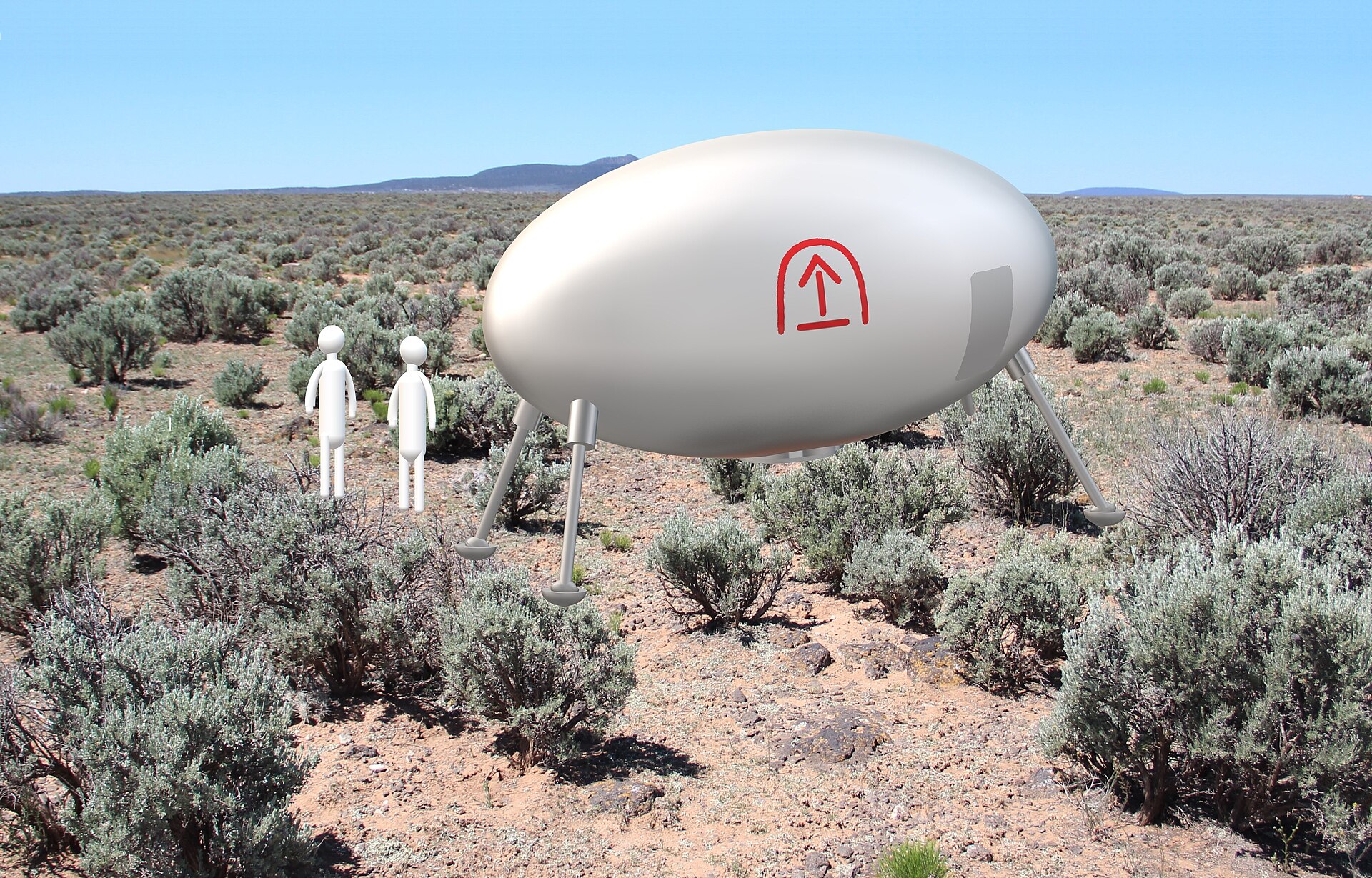
saw a shiny egg-shaped craft on legs in an arroyo with two small figures
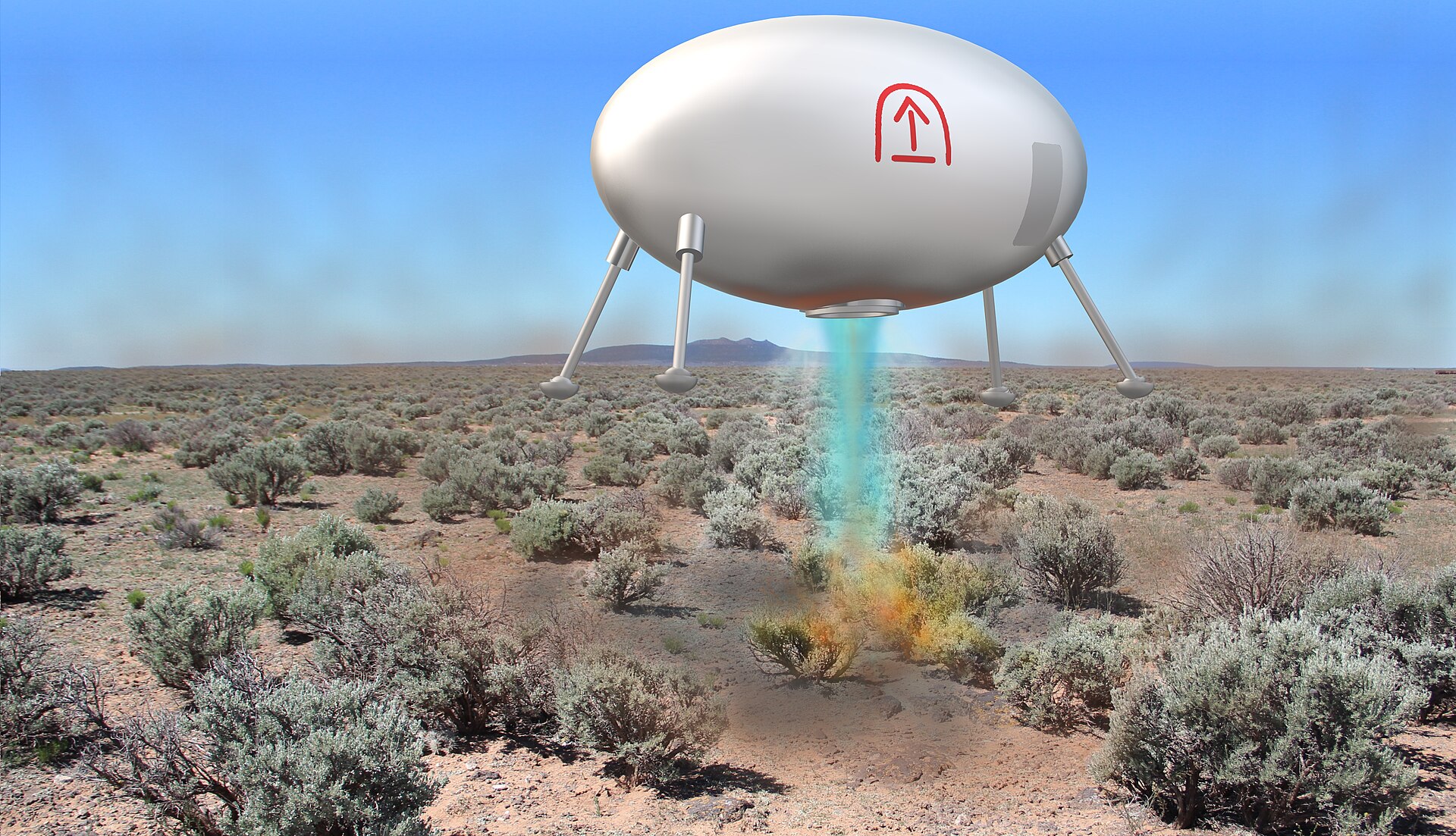
in white coveralls beside it. The craft departed with a roar and a flame,
then in silence. Responders within the hour found burned brush and four
symmetric ground impressions. Blue Book classified it 'unidentified.'
Socorro is the corpus's strongest close-encounter case on witness quality
and physical aftermath combined. The witness was a uniformed officer with
no interest in publicity; the observation was in daylight at close range;
a craft AND occupants were reported; and — unusually for an entity case —
the encounter left ground traces and burned vegetation that independent
responders (state police, FBI, Army) examined within hours. Blue Book's
chief Hector Quintanilla called it 'the best documented case on record'
while leaving it unexplained, and Hynek ranked it among his most
compelling. It is the case that most resists both the hoax and the
misidentification readings without confirming any exotic one.
Timeline
1964-04-24T17:45-0700
Sgt. Lonnie Zamora, Socorro Police Department, is pursuing a speeding
car south out of Socorro when he hears a loud roar and sees a bluish-
orange flame descending in the sky to the southwest. Believing a remote
dynamite shed may have exploded, he abandons the pursuit and drives off
the highway onto a rough gravel track toward the area.
witnesses: Sgt. Lonnie Zamora (Socorro PD)
primary source: Blue Book file; Zamora's contemporaneous statements
1964-04-24T17:47-0700_approx
Cresting a rise, Zamora sees, in a shallow arroyo ~150–200 m away, a
shiny whitish (aluminum-like) egg- or oval-shaped object standing on
girder-like legs. Beside it are two small figures in white coveralls,
'about the size of small adults or large children.' One appears to
react as if it notices him. He briefly takes the object for an
overturned car.
witnesses: Sgt. Lonnie Zamora
primary source: Blue Book file; Hynek interview notes
1964-04-24T17:48-0700_approx
Zamora radios in, drives closer, and stops his cruiser. As he
approaches on foot, he notes a red insignia (which he later sketches)
on the craft's side. A loud roar begins and a flame issues from the
underside; alarmed, Zamora retreats behind his car and shields himself.
The craft rises to about rooftop height, the roar ceases, and it
departs silently to the southwest, clearing the mountains.
witnesses: Sgt. Lonnie Zamora
primary source: Blue Book file; Zamora's statements
1964-04-24T17:50-0700_approx
New Mexico State Police Sgt. Sam Chavez, responding to Zamora's radio
call, arrives within minutes and finds Zamora visibly shaken. The two
examine the arroyo: greasewood brush is still smoldering, a juniper is
charred, and there are four wedge-shaped depressions in the ground,
arranged with rough symmetry, plus what appear to be smaller circular
marks.
witnesses: NM State Police Sgt. Sam Chavez · Sgt. Lonnie Zamora
primary source: Blue Book file; Chavez statements
1964-04-24_evening
FBI Special Agent Arthur Byrnes Jr. of the Albuquerque field office
(in the area) and U.S. Army Capt. Richard T. Holder (up-range commander
at the White Sands Missile Range) arrive to investigate. Holder and
Byrnes document the site, measure the impressions, and interview
Zamora; Holder forwards a report up the military chain.
witnesses: FBI SA Arthur Byrnes Jr. · Army Capt. Richard T. Holder
primary source: FBI memorandum; Holder's report; Blue Book file
1964-04-25_to_-05
Project Blue Book chief Maj. Hector Quintanilla and, soon after,
scientific consultant J. Allen Hynek investigate. Soil from the
depressions is sent to the Air Force Materials Laboratory at Wright-
Patterson AFB; no foreign material is identified. Hynek interviews
Zamora at length and finds him a credible, reluctant witness.
witnesses: Maj. Hector Quintanilla (Blue Book chief) · J. Allen Hynek (Blue Book consultant)
primary source: Blue Book file; Hynek's notes; Materials Lab analysis
1964_following
Project Blue Book classifies the case 'unidentified.' Quintanilla
writes that it is the best-documented case on record and that, despite
effort, no explanation has been found. The red-insignia sketch is held
somewhat in reserve to screen out copycats and hoaxers.
primary source: Blue Book file; Quintanilla's case summary
Named personnel
- Sgt. Lonnie Zamora — Patrol sergeant, Socorro Police Department rank at time: Sergeant · later: Reluctant central witness; avoided publicity; his account remained consistent primary witness to: the landed craft, the two figures, the insignia, and the flame-and-roar departure
- Sgt. Sam Chavez — New Mexico State Police rank at time: primary witness to: Zamora's immediate shaken state and the still-burning brush and ground impressions
- FBI SA Arthur Byrnes Jr. — FBI Albuquerque field office rank at time: role: Early on-scene investigation and federal documentation of the site
- Capt. Richard T. Holder — U.S. Army up-range commander, White Sands Missile Range rank at time: role: On-scene measurement and military reporting of the landing traces
- Maj. Hector Quintanilla — Chief, Project Blue Book rank at time: role: Led the official investigation; classified the case 'unidentified' and called it the best-documented on record
- J. Allen Hynek — Scientific consultant, Project Blue Book rank at time: role: Interviewed Zamora; judged him credible; ranked Socorro among his strongest landing-trace cases
Sensor record
- Mark 1 eyeballs (daylight, close range) on Sgt. Lonnie Zamora a landed egg-shaped craft on legs, two figures, a red insignia, and a flame-and-roar liftoff, all in daylight at a few hundred meters documentation: Zamora's statements and sketches; Blue Book file
- Physical-trace examination on Chavez, Byrnes, Holder, Quintanilla, Hynek four wedge-shaped ground depressions, burned greasewood, a charred juniper, and smaller circular marks documentation: site photographs and measurements; Materials Lab soil analysis (no foreign material identified)
Object — reported
shape
smooth, whitish/aluminum, egg- or oval-shaped, standing on girder-like landing legs; a red insignia on the side
size
roughly car-sized to slightly larger (Zamora's estimate)
surface features
no windows or markings reported beyond the red insignia; the two occupants in white coveralls were near it on the ground
observed behaviors
- at rest on legs in the arroyo with two figures beside it
- loud roar and a bluish-orange flame from the underside on liftoff
- ascent to roughly rooftop height, then a transition to SILENT flight
- rapid silent departure to the southwest over the mountains
- left burned vegetation and four symmetric ground impressions
Theories that invoke this case (4)
The standard reading: a landed craft with occupants and a physical-
trace aftermath, reported by a credible trained observer and left
unexplained by the official investigation — a classic CE2 supporting
the ETH if taken at face value.
Locally strong: Socorro sits near White Sands Missile Range, and a
prototype VTOL or experimental lander has long been proposed. Counter-
argument: no known 1964 vehicle matches the silent departure and the
described form, and the military investigators on scene did not
identify it as a test article.
The cautious reading: a real physical object that left real traces and
whose nature is undetermined — treated as a trace-physics problem
rather than a confirmed exotic craft.
The institutional-handling reading: a rapid, multi-agency on-scene
response (police, FBI, Army, Blue Book, Materials Lab) and the
decision to withhold the insignia — a study in how the official record
was built and curated.
Theories that do NOT invoke this case — and why
single sober trained observer plus physical traces examined by multiple independent responders within the hour; not a mass-perception phenomenon
the figures were associated with a craft, not an animal; not a cryptid case
no time-displacement element
the encounter is a concrete physical-trace event, not an anomalous perceptual experience
Conventional explanations advanced — and their status
A student hoax (New Mexico Tech), staged to prank Zamora or the town
proponents: attributed to NM Tech president Stirling Colgate (1968 remark) · researcher Anthony Bragalia
The most-cited skeptical account: that NM Tech students engineered a hoax. Colgate reportedly said as much in a 1968 letter to Linus Pauling, but never produced evidence, named participants, or explained how a student device produced the silent departure, the burned vegetation, and the symmetric impressions while fooling on-scene FBI and Army investigators. The corpus treats the hoax hypothesis as unproven and under-specified.
A secret experimental craft (lunar-lander prototype / VTOL test) from a nearby military range
proponents: various analysts (including some early Blue Book speculation)
Plausible on geography (White Sands proximity) but unsupported: no program of record matches the description, the timing, or the silent flight, and the on-scene Army officer did not identify it as a test article.
Misidentification of a conventional aircraft, dust devil, or natural phenomenon
proponents: general skeptical position
Inconsistent with the close-range daylight observation of a landed structured object with occupants and with the physical traces; the corpus assigns this little weight.
Where further investigation has leverage
- Any surviving physical samples or unpublished photographs from the 1964 site examination, for modern materials and combustion analysis of the burned vegetation.
- Documentary substantiation of the student-hoax claim — named participants, a described mechanism, or contemporaneous admission — which has never been produced.
- Declassification of any White Sands / military test records for late April 1964 that could confirm or finally exclude an experimental-craft origin.
- The withheld red-insignia sketch and its provenance, as a control against later copycat reports.
Corpus status
phenomenologically-open
A high-quality single-witness close encounter with a physical-trace
aftermath corroborated by multiple independent responders and left
'unidentified' by Blue Book, which called it the best-documented case on
record. The two serious alternatives — a student hoax and a secret craft
test — are each plausible in outline but unsupported in detail, and
neither has accounted for the full set of facts. CONFIRMED held open on the
2026 adversarial re-audit: notably, the loudest skeptical claim (the NM Tech
student hoax) is evidentially the WEAKEST — in 60+ years it has produced no
named perpetrator, no mechanism, and no confession, resting entirely on
Colgate's second-hand 'good indication.' The honest caveat is that only Zamora
saw the craft and figures (responders corroborate the aftermath, not the
object), so under-corroborated is a defensible secondary tag — but the
same-day, multi-agency physical-trace aftermath that no prosaic account closes
keeps phenomenologically-open the better primary status. The corpus holds
Socorro open as its strongest close-encounter case on combined witness quality
and physical evidence.
status history (1)
2026-06-09 · unannotated → phenomenologically-open
— initial annotation sweep (Epic J.F4)
Suggested watching
episode · 2005 · History / various
UFO Files — UFO Cop
Reconstruction of Sergeant Lonnie Zamora's April 24 1964 close encounter outside Socorro, New Mexico. The case Hynek considered among his most unexplainable.
Threads of evidence
This case is one node in the connections that run across the record. It appears in 2 threads: