Tehran F-4 Incident (19 September 1976) under-corroborated
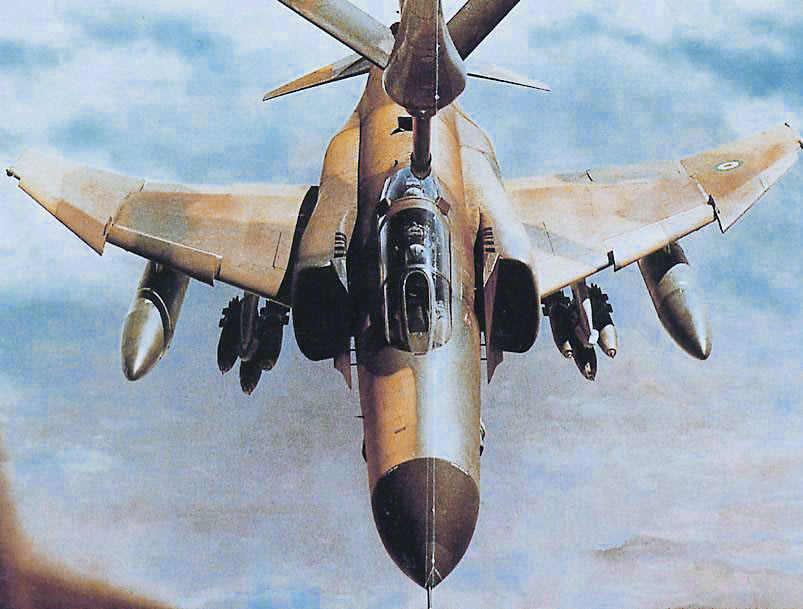
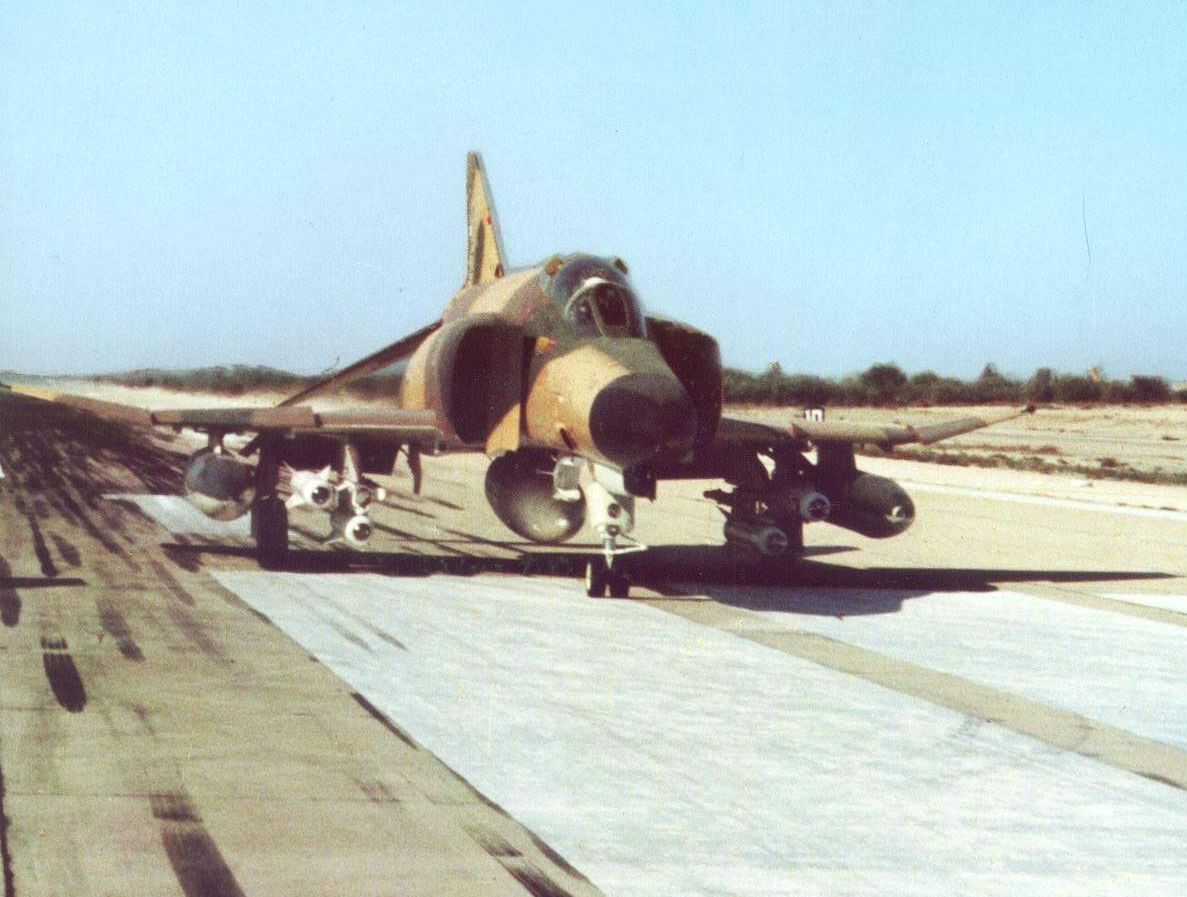
Two Imperial Iranian Air Force F-4 Phantom IIs were scrambled to
intercept a brilliantly-lit object over Tehran in the early hours of
19 September 1976. Each aircraft lost instrumentation, weapons, and
radio on approach and recovered them on withdrawal; the second jet held
an airborne radar lock on the object, watched a smaller object detach
and close on it, and could not fire. The event is documented in a U.S.
Defense Intelligence Agency file distributed within a day to the White
House, Joint Chiefs, CIA, NSA, and State.
Tehran is the strongest pre-2004 military radar-visual case in the
corpus and the cleanest example of the electromagnetic-interference
signature: equipment degradation that tracks proximity to the object
and reverses with distance, replicated independently on two aircraft
and one ground station. Its evidentiary anchor is unusual — not a
later-published memoir but a contemporaneous, multi-agency intelligence
document with a formal evaluation rating it 'an outstanding report.'
It is the bridge between the Blue Book era and the modern Navy cases:
professional military aircrew, an instrumented intercept, and a
documentary chain of custody, twenty-eight years before Nimitz.
Timeline
1976-09-19T00:30+0330
Tehran's Mehrabad Airport control tower begins receiving calls from
civilians in the Shemiran district reporting a brilliant object,
variously described as bird-like or like a hovering light, low over
the city. The tower contacts Gen. Yousefi, assistant deputy commander
of operations for the Imperial Iranian Air Force.
witnesses: civilian callers to Mehrabad tower · Gen. Yousefi (assistant deputy commander of operations, IIAF)
primary source: DIA case file 6 846 0139 76 (Defense Attaché message, Tehran, Sept 1976)
1976-09-19T01:00+0330
Gen. Yousefi steps outside, sees the object himself — far brighter
than a star — and judges it genuinely anomalous. He orders an F-4
Phantom scrambled from Shahrokhi Air Base near Hamadan, roughly
280 km west of Tehran.
witnesses: Gen. Yousefi
primary source: DIA case file 6 846 0139 76
1976-09-19T01:30+0330
The first F-4 launches and acquires the object on its airborne radar.
As it closes to approximately 25 nautical miles, the aircraft suffers
a simultaneous loss of instrumentation and UHF/intercom communications.
The pilot breaks off the intercept and turns back toward Shahrokhi;
his instruments and radio recover as he withdraws.
witnesses: first F-4 pilot (name not in the public record)
primary source: DIA case file 6 846 0139 76
1976-09-19T01:40+0330
A second F-4 launches, flown by Maj. Parviz Jafari with his weapons
systems officer Lt. Damirian in the back seat. Jafari acquires the
object on radar at about 27 nm; the return is reported as comparable
in size to that of a Boeing 707 tanker. As he closes, the object
maintains its distance, pacing the aircraft. The object is intensely
bright with flashing colored lights — described as blue, green, red,
and orange — arranged in a rectangular or diamond pattern.
witnesses: Maj. Parviz Jafari (pilot) · Lt. Damirian (weapons systems officer)
primary source: DIA case file 6 846 0139 76; Jafari's 2007 testimony
1976-09-19T01:45+0330_approx
A smaller, bright object detaches from the primary and accelerates
toward Jafari's F-4. Jafari moves to fire an AIM-9 Sidewinder; at that
instant his weapons control panel goes dead and he loses UHF and
interphone communications simultaneously. He takes evasive action in a
negative-G dive; the smaller object follows briefly, then turns and
rejoins the primary object.
witnesses: Maj. Parviz Jafari · Lt. Damirian
primary source: DIA case file 6 846 0139 76; Jafari's 2007 testimony
1976-09-19T01:50+0330_approx
A second small object descends from the primary and appears to fall
straight toward the ground, then to settle gently, casting a bright
glow over an area the crew estimate at two to three kilometers across.
Jafari notes the location. His systems recover as he gains distance,
and both jets return to base; a civilian airliner on approach reports
communications interference while passing through the area.
witnesses: Maj. Parviz Jafari and Lt. Damirian · an unnamed civilian airliner crew (comms interference)
primary source: DIA case file 6 846 0139 76
1976-09-19_daytime
A daylight overflight and ground check of the apparent landing area
is conducted. Accounts describe a survey near a dry lake bed; a nearby
resident reportedly recalled a loud noise and a bright light during
the night. No definitive physical residue tied to the event is
established in the public record.
primary source: DIA case file 6 846 0139 76 (follow-up notes)
1976-09_within_a_week
The U.S. Defense Attaché office in Tehran transmits the account as a
Defense Intelligence Agency report (case file 6 846 0139 76). An
attached Defense Information Report Evaluation rates the case highly
across reliability, value, and utility, and the document is
distributed to the White House, the Joint Chiefs of Staff, the CIA,
the NSA, and the Secretary of State.
primary source: DIA case file 6 846 0139 76, declassified under FOIA
2007-11-12
Retired Brig. Gen. Parviz Jafari testifies on the record at the
National Press Club in Washington, D.C., at the event organized by
journalist Leslie Kean, recounting the intercept in detail more than
three decades later and consistently with the 1976 document.
witnesses: Brig. Gen. (ret.) Parviz Jafari
primary source: National Press Club event, 12 November 2007
Named personnel
- Maj. Parviz Jafari — Pilot, second F-4 Phantom II, Imperial Iranian Air Force rank at time: Major · later: Retired as Brigadier General; on-record witness at the 2007 National Press Club event primary witness to: the radar lock, the detaching object, the weapons/comms failure, and the descending light
- Lt. Damirian — Weapons systems officer (back seat), Jafari's F-4 rank at time: Lieutenant primary witness to: the airborne radar return and the cockpit systems failure
- Gen. Yousefi — Assistant deputy commander of operations, Imperial Iranian Air Force rank at time: primary witness to: the object by direct naked-eye observation from the ground; ordered the scrambles
- First F-4 pilot (unnamed) — Pilot of the first intercept aircraft from Shahrokhi AB rank at time: primary witness to: the first, independent instance of instrument and comms loss on approach
- U.S. Defense Attaché, Tehran (report originator) — Drafted and transmitted the DIA report on the incident rank at time: role: Created the contemporaneous documentary record and its formal evaluation
Sensor record
- AN/APQ-120 airborne fire-control radar (F-4 Phantom II) on Maj. Jafari's second F-4 radar lock on the object at ~27 nm; return reported as comparable to a Boeing 707; the object paced the aircraft, maintaining range documentation: Recounted in the DIA file and Jafari's testimony; raw tapes not in the public record
- F-4 aircraft electronics, weapons, and UHF/intercom (as an inadvertent sensor of interference) on both F-4s and a civilian airliner repeated, proximity-correlated loss of instrumentation, weapons control, and radio — recovering on withdrawal — on two military aircraft independently and reported interference on a civilian aircraft documentation: DIA file 6 846 0139 76
- Mark 1 eyeballs (air and ground) on Gen. Yousefi (ground), both aircrews, civilian callers an intensely bright object with flashing blue/green/red/orange lights in a rectangular pattern; detaching sub-objects; a descending light that appeared to land documentation: DIA file; civilian tower calls; Jafari testimony
Object — reported
shape
primary object intensely luminous; flashing colored lights (blue, green, red, orange) in a rectangular or diamond arrangement; the structural form was masked by the brightness
size
radar return comparable to a Boeing 707 (Jafari)
surface features
no conventional aircraft features discernible through the glare
observed behaviors
- pacing the pursuing F-4, holding constant range despite supersonic closure
- emitting a smaller bright object that closed on the F-4 then returned to the primary
- emitting a second object that descended and appeared to land, casting a wide ground glow
- proximity-correlated electromagnetic interference: weapons, instruments, and radio failing near the object and recovering with distance, on multiple aircraft
Theories that invoke this case (5)
The standard reading: a structured, intelligently-controlled craft
with performance (instantaneous pacing of a supersonic interceptor)
and effects (selective electronic suppression) beyond 1976 terrestrial
capability, documented by trained military observers and instruments.
The cautious reading: a real object exerting real electromagnetic
effects whose physics is not understood, treated as an
instrumentation-and-physics problem rather than a confirmed exotic
craft.
The mundane-but-classified reading: an advanced electronic-warfare
or reconnaissance platform (of unknown nationality) capable of
jamming aircraft systems. Counter-argument: no 1976 platform is known
to have both the flight performance and the selective-suppression
capability reported, over a NATO-adjacent ally's capital.
The non-biological reading: the responsive maneuvering and the
emission of sub-objects that act with apparent purpose are consistent
with autonomous, unmanned operation.
The institutional-handling reading: the interest is in the document
itself — how the report was generated by a Defense Attaché, evaluated,
classified, and routed to five top agencies within a day, and what
that custody implies about official seriousness.
Theories that do NOT invoke this case — and why
no associated perceptual phenomenology (missing time, disorientation, poltergeist effects); the case is a hard-physics radar-and-EM event
no entity sighting; a pure aerial/technological-phenomenon case
instrumented (airborne radar) and physically-effected (multi-aircraft EM failure) record by trained aircrew makes a mass-psychology reading untenable
no time-displacement or causality narrative
Conventional explanations advanced — and their status
Misidentification of a bright celestial object (Jupiter) + meteor shower + coincidental avionics faults + a stray emergency beacon
proponents: Philip J. Klass · James Oberg · Brian Dunning (Skeptoid)
The leading skeptical STACK: Jupiter (well-placed that night; Yousefi described 'a very large star… without the twinkle,' structure only via binoculars) for the sustained object; the near-maxima Gamma/Southern Piscids for streaking 'sub-objects'; the F-4's documented electrical/avionics unreliability (repaired a month earlier; a possible 'manual track' false lock) for the failures; and a shed C-141 emergency beacon for the dry-lakebed 'beeper.' Plausible but it fragments into a chain of independent coincidences to cover the whole event, and a rising Jupiter sits awkwardly high for an object chased toward the horizon (no published 1976 alt/az reconstruction exists — a real gap).
F-4 avionics/electrical unreliability as the sole cause of the equipment failures
proponents: Oberg · various skeptics
Plausible for a single aircraft; strained as an explanation for independent, proximity-correlated failures on two aircraft and reported interference on a third (civilian) aircraft within the same event window.
Meteor / re-entry / atmospheric optics for the initial bright object
proponents: various skeptics
Cannot account for the sustained (over an hour), maneuvering, range-holding object, nor for the detaching sub-objects and the descending light.
Document inflation — the DIA evaluation overstated an ambiguous report
proponents: skeptical readings of the file
The DIRE's high rating reflects source reliability and report completeness, not a government conclusion that the object was extraterrestrial; the corpus reads the file as strong testimony-and-evaluation, not as proof.
Where further investigation has leverage
- Recovery of any surviving Imperial Iranian Air Force operational records (radar tapes, maintenance logs for both F-4s) that could confirm or rule out pre-existing avionics faults.
- Independent technical assessment of whether a single external source could selectively suppress weapons, instruments, and UHF on an F-4 while leaving flight controls usable, and recover with range.
- Identification and testimony of the first F-4's pilot and the civilian airliner crew, to corroborate the independent, proximity-correlated nature of the interference.
- Astronomical reconstruction of the 19 September 1976 Tehran sky to test the Jupiter hypothesis against the reported altitude, motion, and radar lock.
Corpus status
under-corroborated
Reclassified from phenomenologically-open to under-corroborated on a 2026 adversarial
re-audit. The case has an unusually strong contemporaneous ANCHOR — the Mooy/DIA
teletype distributed within ~24h to the White House, JCS, CIA, NSA, and State, plus a
real-time radio recording of the first intercept — and two genuinely hard residuals the
prosaic stack does not cleanly dispose of: a radar lock that Bruce Maccabee's interviews
with the IIAF avionics engineer judged was not ground clutter (~48 s), and a
proximity-correlated systems failure the tape supports on the FIRST aircraft (not just
the second, so the corpus had if anything understated this against the skeptics). But
every element that makes the case extraordinary — the detaching sub-objects, the
707-sized return, the weapons-panel failure, the descending 'landing' light — reaches us
only through that single same-week summary plus interviews recalled 4 months to 31 years
later (Pratt's Jan-1977 National Enquirer files; Jafari in 1996/2007), with no surviving
radar tapes, maintenance logs, or published radiation results. There is also a real
internal discrepancy: Mooy's memo describes a vertical 'landing' while Jafari's later
account describes an oblique below-horizon descent. Compelling but unverifiable on the
hard points — held under-corroborated, not open. (Not disputed-optical-artifact: the
Jupiter+avionics+meteor+beacon stack needs too many stacked coincidences and cannot
dispose of the corroborated radar lock.)
status history (2)
2026-06-09 · unannotated → phenomenologically-open
— initial annotation sweep (Epic J.F4)
2026-06-14 · phenomenologically-open → under-corroborated
— adversarial re-audit of the strongest open instrumented cases — Everything extraordinary (detaching sub-objects, 707-sized return, weapons-panel failure, descending 'landing' light) reaches us only throug
Suggested watching
episode · 2005 · History / various
UFO Files — Iran's UFO Coverup
History Channel reconstruction of the September 19 1976 incident with the two Imperial Iranian Air Force F-4s, including the DIA Defense Intelligence Report in facsimile.
documentary · 2020 · Prime / Apple / various
The Phenomenon
Fox's film includes the Tehran case among its survey of internationally documented cases.
Threads of evidence
This case is one node in the connections that run across the record. It appears in 3 threads:
The radar-visual military lineage
— Airborne radar lock + proximity-correlated avionics failure on two F-4s; the same-week DIA file.
The electromagnetic-effects signature
— Weapons, instruments, and radio failing on approach and recovering on withdrawal — on two aircraft.
The Leslie Kean disclosure nexus
— Gen. Parviz Jafari testified at Kean's 2007 National Press Club event.